Is This Trip Beginner-Friendly?
This trek is arduous, but first-time hikers who are determined can do it if they are ready. The 20-day Manaslu Tsum Valley trip plan has gradual climbs, days off, and guides who know what they’re doing. But you need to be in good form and have a lot of mental power because it lasts a long time, is in a remote place, and is at a high altitude.
If you’re new to hiking, you should practice a lot before you go, walk on various kinds of terrain, and maybe even do a shorter hike first. Find a guide who has been there before and will watch over you, set the pace, and help you when you need it. If you have an open mind, listen to your body, and stay positive, the trek can be a life-changing personal success.
Private Trip vs. Group Joining
When you arrange your trip, you’ll have to decide whether to go in a group or on your own. If you join a group, you can save money by splitting the cost of permits, transportation, and guide costs. You’ll also meet other travelers from all across the world. If this is your first time hiking at a high altitude, it’s good to know that group hikes have established start times and routes.
You can go at your own pace, adjust the timetable, choose your travel partners, and talk to your guide more on a private trek, but it costs more. Couples and families often start on private trips, while people who travel alone might appreciate being with a group.
Trip Extension
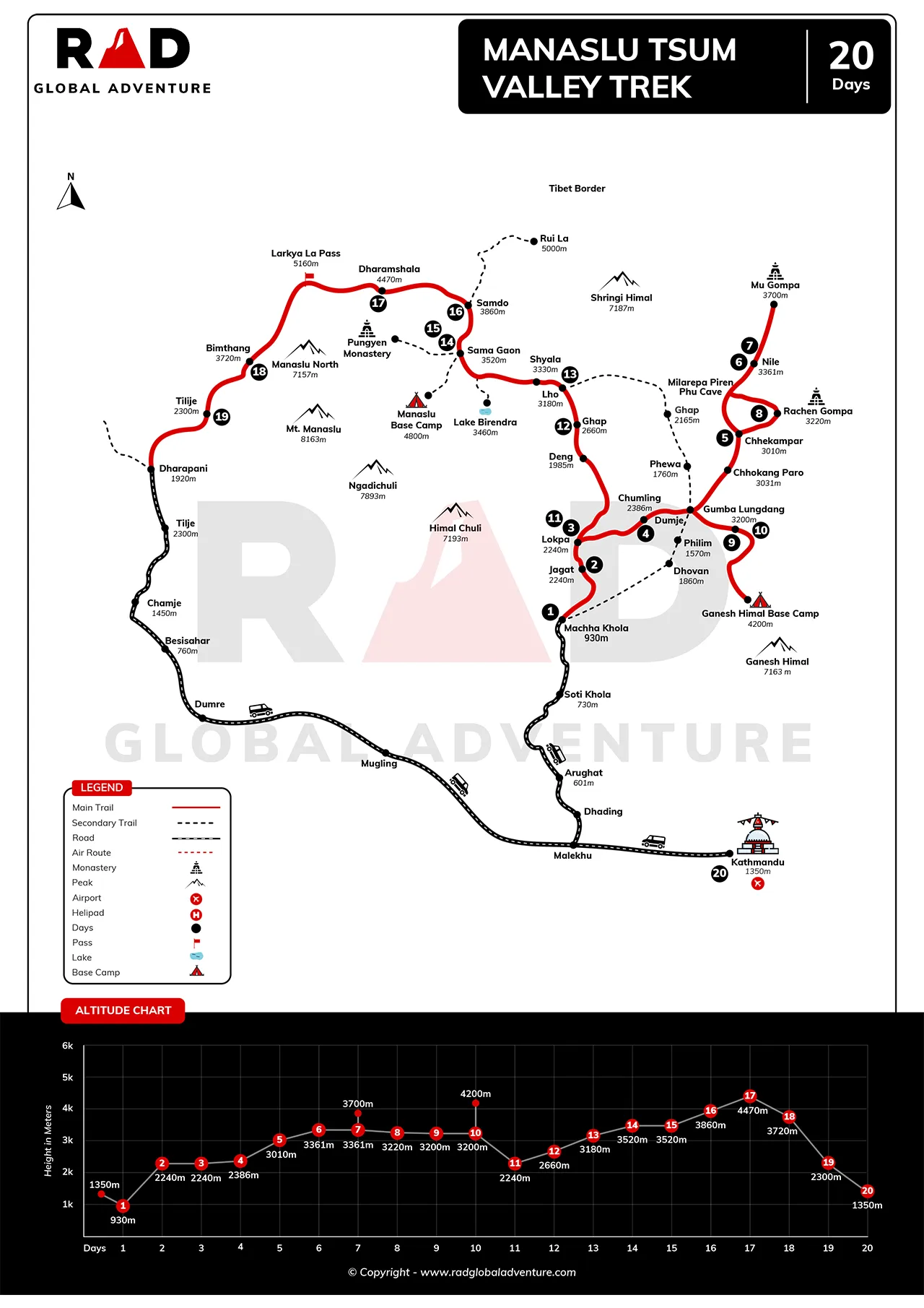
The Manaslu Tsum Valley trip usually takes 20 days; however, there are several ways to stay in Nepal longer. From Larkya La, you can proceed west on the Annapurna Circuit and spend the night in Pisang, Manang, and Thorong La. You might also climb to Tilicho Lake, which is one of the highest lakes in the world.
If you like culture, you could spend extra time in Kathmandu Valley to see Bhaktapur and Patan, or you could go to a yoga retreat in Pokhara. You can help out in monasteries, go on meditation retreats, or learn languages right in the Tsum Valley. Ask your tour operator how to add on to your trip in a way that works for you.
Solo Travel
You must observe the rules of the area if you are traveling alone. You can’t get to the Manaslu Tsum Valley on your own. You need a competent guide and at least one other person with you. Joining a group that is already there is the quickest way to meet this requirement and make friends with other travelers.
If you want more flexibility, hire a guide and a porter to help you on your own trek. You will need to be a registered group on paper, but you can change your schedule every day. Hikers who go alone prefer being able to go at their own speed, learn about the area, and feel safer.
Drones and Photography Rules
The Manaslu Tsum Valley Trip features breathtaking views and cultural scenes that make you want to shoot pictures. Take shots of the mountains, the prayer flags, the cheerful kids, and the busy kitchens at the teahouse. Before you snap a picture of someone, always ask them first, especially monks or older individuals.
Drone use in restricted areas like Manaslu/Tsum is highly restricted; official permits are technically required from the Ministry of Home Affairs and the Civil Aviation Authority, but in practice they are very difficult for trekkers to obtain. Flying without permission can lead to fines or confiscation. When you snap images, make sure you have extra batteries, memory cards, and cases to preserve your camera. Also, be respectful of places that are spiritual or private.
Cultural Festivals on the Trails
Adding local festivals to your travel plans makes it much more exciting. In June, the Dumje celebration in Tsum Valley remembers the birth of Guru Rinpoche with masked dances and a great banquet for everyone. People dress up in bright colors, play music, and do archery activities to celebrate Loshar, the Tibetan New Year, which is between January and March.
Loshar and other local pujas are celebrated in the Nubri Valley. The lunar calendar determines when festivals happen, and they happen at different times each year. Check with your trekking company for the exact periods. Going to a festival is a way to see traditions that have been around for hundreds of years.
Tips for First-Time Nepal Visitors
If you’re heading to Nepal for the first time to go trekking, be open-minded and appreciative of the culture there. For permissions, bring extra photographs and copies of your passport. When you travel to a holy place, make sure to cover your knees and shoulders. When you go to temples and residences, you should take off your shoes. Use your right hand to get money or food.
Dinner is served early in teahouses, and you have to share the dining area with other hikers. You should bring hand sanitizer, toilet paper, and a tiny towel because the facilities aren’t very good. Learn a few words in Nepali and always greet people with a friendly namaste. Be polite when you haggle at markets, but remember that the prices in rural teahouses are set.
Typical Daily Routine on the Trip
Your days of hiking follow a simple plan that works with the mountains. Get up at 5:30 a.m. and get your daypack and breakfast ready by 6:00 a.m. Leave between 6:30 and 7:00 a.m. and walk at a steady pace, pausing for drinks and pictures along the way. Around noon, people eat lunch in a teahouse or somewhere with a view.
The afternoon walk concludes around 3 p.m., so you have time to wash up, rest, and explore the village. At 6 p.m., dinner starts, and after that, your guide talks about the hike the next day. Evenings are quiet.Several trekkers converse, read, write in their diaries, or pray before bed at 9 p.m.
Mental Preparation and Trekking Mindset
The Manaslu Tsum Valley trek is demanding on both your body and your mind. You’ll have long days, modest comforts, weather that changes quickly, and be at a high altitude. Every day, be curious and patient. If the steep slopes or cold nights seem too much to manage, take a deep breath and move one step at a time. Be prepared for your plans to alter due to the weather or your health, and trust what your guide says. Talk to folks who reside there and learn about their lives. Don’t anticipate anything. By focusing on the trip instead of the destination, you will learn to be more thankful, open-minded, and enjoy the Himalayan way of life.
 English
 Dutch
Dutch Japanese
 Hindi
Hindi Italian
 Spanish
 French
 German
 Chinese
 Korean
 Arabic
 Hebrew
 Russian
 Portuguese
 Danish
 Czech
Czech Polish
 Swedish