Daily yoga and meditation in Himalayan settings
This journey is a gentle blend of yoga and meditation within our daily schedule. You will wake up every morning at dawn to stretch and breathe and meditate in cool mountain air that fills the valley. You can do sun salutations on green hills with yaks grazing around, or can have some silent pranayama sessions on the verandahs of monasteries amidst fluttering prayer flags.
The guides make sure all participants including new ones are able to participate without problems. In between ascents you may practice meditation in the quiet tea rooms or beneath blooming rhododendron trees. These basic everyday routines provide peace, tranquility and consciousness that make the process of exploring the Himalayas a moving spiritual retreat.
Visit sacred Thuptenchholing & Junbesi monasteries
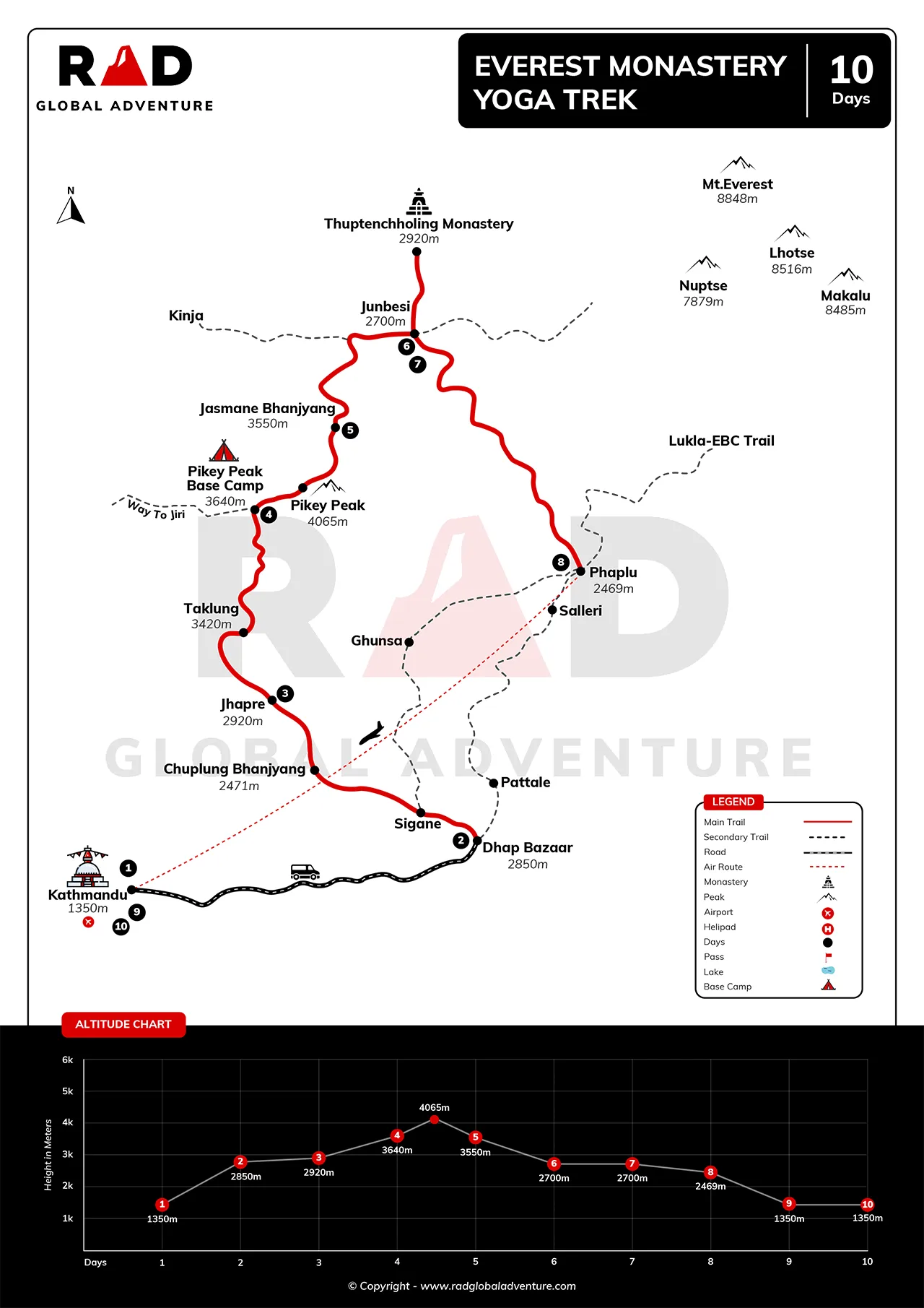
The trek highlights include two important Buddhist sites. In Junbesi valley, Thuptenchholing Monastery (also called Tengboche of Solu) sits on a hilltop. Founded centuries ago, it’s one of Nepal’s largest nunneries. Inside, colorfully painted statues glint in candlelight and rows of prayer wheels tumble prayer through the air.
You can quietly observe the morning puja or even request a blessing. The large courtyard has gentle resident monks (mostly nuns) who welcome guests. In Junbesi itself (2,700 m) you’ll also see stone chortens and a stupa by the river – an intimate shrine that locals worship daily.
Explore Sherpa villages and culture
You will trek through authentic Sherpa communities. In villages like Jhapre, Dhap and Junbesi you encounter farmers carrying yaks, local women weaving and children in school uniforms. Each teahouse is family-run, so you’ll dine with mountain families over home-cooked meals. Hosts often share stories about life in the Himalaya or invite you into their kitchen for tea.
You’ll notice traditional dress (colorful homespun clothing, prayer shawls) and hear greetings like “tashi delek” (hello). Living alongside villagers offers insights into customs, from mani stones by the trail to Buddhist prayer flags at every hillside home.
Scenic trails through forests and valleys
Much of the trek is on forested ridges with open vistas. You will trek under tall oaks and rhododendrons – in spring the slopes erupt in pink and red blooms. The path follows river valleys (Junbesi Khola) and crosses wooden bridges over icy streams.
Mountain meadows dotted with barley fields and yaks give way to pine and bamboo as you climb higher. From time to time the trail opens to grand views – look back to see emerald farmland spread in the valley below. Above Junbesi, every turn of the trail gives new panoramas of peaks and sky, making the walk as beautiful as the yoga.
Ideal for spiritual rejuvenation
This trek is essentially a moving meditation in nature. The morning yoga and meditation classes in Himalayan light help center the mind. Midday breaks and prayer stops encourage mindfulness, and evenings are quiet with nothing to distract you. The rhythm of breathing exercises and chanting prayers carries over into the trek, giving each step an inner calm.
Travelers often say the journey “unwinds” them; one guidebook notes you’ll find “no other hiking experience like doing yoga while gazing at mountains”. The Himalayan environment – prayer flags fluttering, temple bells chiming in the dawn – naturally leads to reflection.
Breathtaking panoramic mountain views
The best part of the trek is making it to the panoramic top of Pikey Peak (4,065 m). In this beautiful perspective, you will find, in the distance, Mount Everest glaring over the horizon, and the great Lhotse, Makalu, and Kanchenjunga glittering there. On the north side is Thamserku and Karyolang and to the west one can see the great ranges of Annapurna and Manaslu.
The view of the sunrise viewed here is unforgettable, with hundreds of the Himalayan peaks glowing in the gentle golden light. At times you are not at Pikey Peak, villages like Dhap and Jhapre still give you a glimpse of snow-covered summits with the help of the forest. The views of these mountains are always constant to remind you of the beauty and height of the Himalayas around you.
Enjoy homely mountain teahouses
In the trek, accommodation will be at family-run teahouses which will provide homely environment. Rooms are plain, having twin beds, wool blankets and common baths with squat toilets. Facilities are simple, but the hospitality is also good and warm. teahouses are normally heated either using wood stoves or solar lamps and in the evenings your hosts can offer freshly baked bread and sweet masala tea.
The dining rooms, which are frequently illuminated with string lights, seem like mountain living rooms. There is a shortage of electricity and you can pay a little to use charging devices, thus evenings are better spent chatting and reading, or relaxing under candle lights. At Kathmandu, you will be staying in a nice three star hotel both before the trek and upon completion of trek.
Perfect mix of nature, culture & discovery
In short, the Everest Monastery Yoga Trek offers a little bit of everything. You walk through lush Himalayan nature, visit sacred temples, and meet warmly welcoming Sherpa families. Each day blends activity (trek or yoga) with chance to learn (monastery tours, discussions with monks).
The schedule is designed for spiritual retreat rather than a hardcore climb – for example, it includes an acclimatization day at Junbesi. By combining gentle trekking with meditation, local culture, and stunning mountain scenery, this journey truly offers mind and body rejuvenation in the Everest region.
 English
 Dutch
Dutch Japanese
 Hindi
Hindi Italian
 Spanish
 French
 German
 Chinese
 Korean
 Arabic
 Hebrew
 Russian
 Portuguese
 Danish
 Czech
Czech Polish
 Swedish