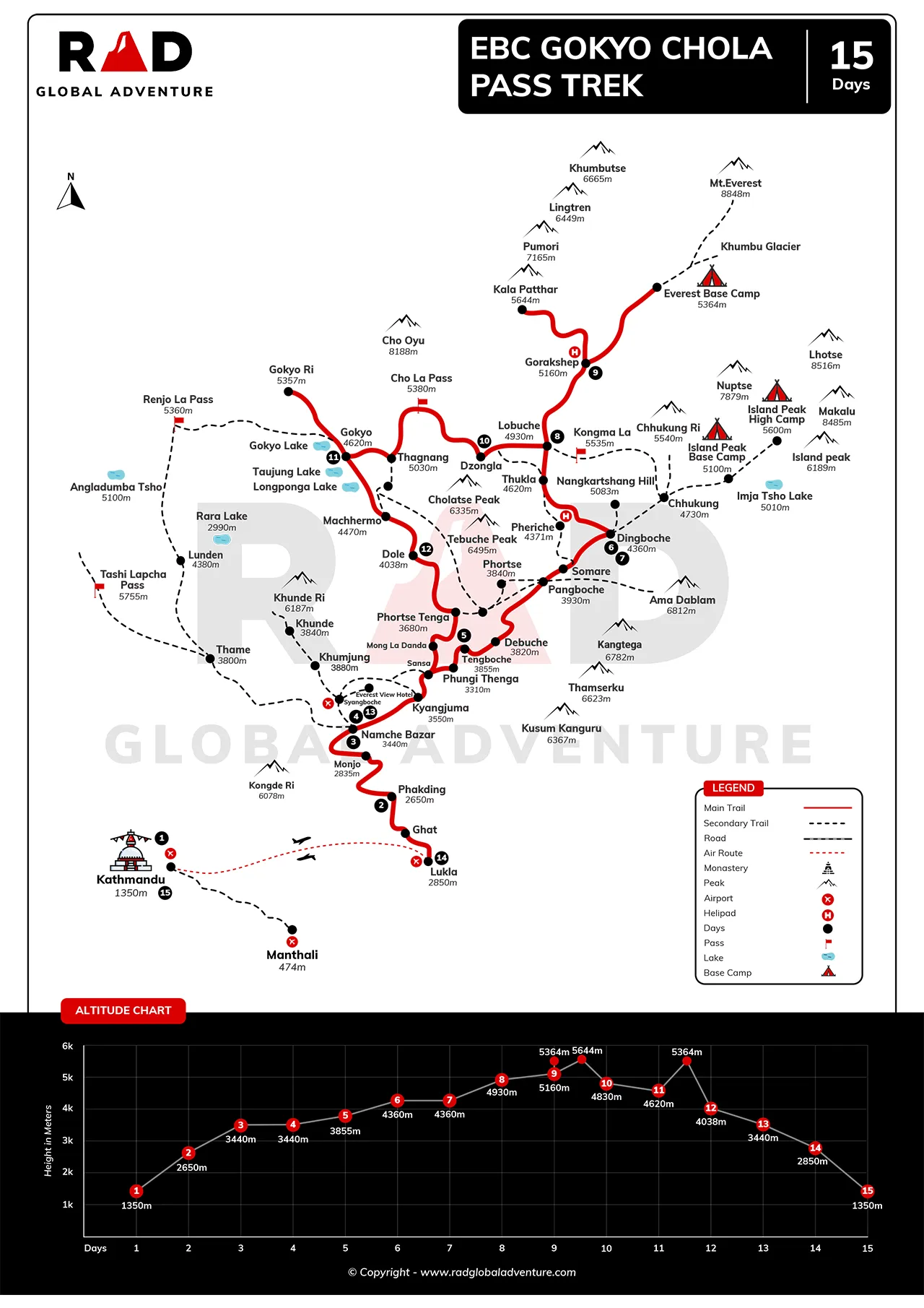
Is EBC Gokyo Chola Pass Trek beginner-friendly?
The EBC Gokyo Chola Pass Trek would be appropriate for moderately experienced and fit trekkers. It entails working long days at high elevations. Without any prior experience in the field of trekking, it is advisable to first undergo some training hikes.
But even beginners can get through this trek with proper preparation. To be on the safe side, most first-time trekkers employ the services of a guide and porter and adhere to plans of acclimatization.
Private trip vs Group Joining
You can do this trek in a group tour or as a private trek. Group trips are typically set departure tours; you get grouped and divide the expenses. If you choose a private tour, then you have the flexibility to customize the journey.
If you are an individual traveler here in Nepal, you can join our group tour. In both instances, there are guides and porters to your aid. Flights (Kathmandu-Lukla) are shared (group flight), and on demand, a personal flight may be obtained at an additional price (private flight).
Trip Extension
Following the trek, you can continue your stay in Nepal. Most trekkers also take a day off in Kathmandu to visit UNESCO temples in Patan or Bhaktapur or have a rest in Nagarkot viewing the Himalayas.
You may include an Annapurna sightseeing, a Chitwan jungle safari. We suggest that you spend one day resting and exploring Kathmandu Durbar Squares, temples, and markets. Alternatively, you might add GokyoRi back onto the trek.
Solo Travel on the EBC Gokyo Chola Pass trek
Solo travelers are welcome. Most companies put the solo clients in small groups or have personal guides. Solo trekkers are also accommodated and supported by trek operators. You can be required to share a teahouse room.
You should make a registration with your embassy and also a safety locator. Guides may be employed, and porters are hired to carry additional weight. The trail is not usually empty during the season, but you will see numerous other hikers.
Photography & Drone Rules
Nepal has various photogenic places around. Any drone has to be registered by the Civil Aviation Authority and must have been granted special permits. Drones must not fly in the Sagarmatha National Park (Everest region) without getting the approval of the wildlife authorities. Permits are extremely difficult to obtain, so most trekkers cannot legally fly drones here. Commercial drones require the approval of several ministries.
It is also free to take pictures on the trail (people are normally pleased to be photographed), but be cautious. Cameras and tripods are welcome; there can be a ban on photos of wildlife and religious sites.
Cultural Festivals on the Trail
Coincide your EBC Gokyo Chola Pass Trek with festive seasons. A well-known Buddhist festival in Tengboche (late Oct/Nov) is called Mani Rimdu, in which masked dances are performed in the monastery. In Namche and Khumjung, people celebrate Gyalpo Losar (Sherpa New Year, Feb/Mar).
During spring, you could hear Dumji dances (invoking rain) in Namche (May/June). At the Tengboche and Pangboche monasteries, Buddha Jayanti (full moon April/May) is a blessing. Check festival dates before planning your trek to coincide with them.
Tips for First-Time Nepal Visitors
Visa: You’ll get a visa on arrival at Kathmandu airport or get one from a Nepali consulate prior to arrival. Don’t forget to bring your passport photos.
Currency: Bring sufficient USD or euros to exchange. There are ATMs in Kathmandu and Namche, but they charge a fee.
Packing: You’ll need layers (temperatures will vary from 20 °C in the day to below 0 °C at night). Don’t over-pack, you’ll be able to buy things you forgot in Kathmandu or Namche.
Health: Don’t drink tap water. Drink bottled or boiled water only. Eat at busy places to ensure food is getting frequently rotated. Take what basic medicine with you.
Cultural notes: You can greet in Nepali saying “Namaste.” Shoes are removed at the entrance of temples. Tipping is normal for guides and porters, about 10 – 15 percent of the cost of your trek.
Typical Daily Routine on the EBC Gokyo Chola Pass trek
Most days start early. You will typically wake up around 6-7 am, have breakfast by 7 am, and then hike for 5-7 hours (with breaks along the way) to the next tea house. Lunch may be a packed sandwich or a cooked meal while on trek.
You will often arrive at the lodge in the late afternoon (3-5 pm) and rest before dinner, which is around 6-7 pm. You are likely to get into bed by 9 pm. On acclimatization days, you may have a short hike in the morning, or you may have a rest day. Bring a headlamp to navigate the darkness during the early morning trek.
Mental Preparation & Trekking Mindset
This trek will require patience along with a positive mindset. You will face altitude, cold, and physical exhaustion, so keep a consistent and determined pace. The trek tests your endurance, agility, and stability. You can celebrate small accomplishments to keep the motivation high.
Everybody is moving at their own pace, don’t rush it. The reward is a profound sense of achievement – when you reach GokyoRi or Everest Base Camp after long effort, the views and personal triumph are unforgettable.
 English
 Dutch
Dutch Japanese
 Hindi
Hindi Italian
 Spanish
 French
 German
 Chinese
 Korean
 Arabic
 Hebrew
 Russian
 Portuguese
 Danish
 Czech
Czech Polish
 Swedish