expert-image
Talk to a Travel Expert +977 9818264758

Bookings Now Open for Nepal Treks, Tours & Climbing – 2026 & 2027

View Details
Chulu Far East Peak Climbing

Chulu Far East Peak Climbing

Based on 25 reviews
duration
Duration

16 Days

difficulty
Trip Difficulty

Challenging

max-altitude
Max. Altitude

6,059m

destination
Destination

Nepal

group-size
Group Size

2-16 People

start-end
Start / End

Kathmandu / Kathmandu

meals
Meals

Breakfast, Lunch & Dinner

accommodation
Accommodation

Lodge, Tented Camp

transportation
Transportation

Tourist Bus

expert-image
Need Help? Ask to Travel Expert
Get a Trip Quote Customize This Trip Make an Inquiry
  • Best Deal
  • Flexible Schedule
  • Instant Booking
  • No Hidden Costs
trip-advisor
5.0
25 reviews

Overview of Chulu Far East Peak Climbing

The Chulu Far East Peak Climbing, an adventure in Nepal’s Annapurna region, is one of the most intimate trekking experiences in Nepal. This 16-day trip mixes trekking and climbing, aiming for the 6,059-meter summit of Chulu Far East. Begin in Kathmandu at 1,400 meters, explore its culture, then drive to Chame at 2,710 meters. Trek through forests and villages like Lower Pisang and Humde in the Manang Valley. Follow the Marsyangdi River with views of Annapurna peaks.

We ascend to Julu Khola at 3,500 meters, including rest days for adjustment, move to base camp at 5,000 meters, and then to high camp at 5,500 meters, before the summit climb. Use ropes and crampons on moderate terrain, suitable for those with basic mountain climbing experience. Our team offers training to prepare you for the climactic climb. After the summit, we descend back to Chame and return to Kathmandu. The package includes transfers, Kathmandu tour, transport, meals on trek, lodging, guide, porters, permits, and first-aid. You cover gear, visa, flights, insurance, tips, and drinks.

Experience the Annapurna massif views, wildlife like blue sheep, himalayan thar, deer, etc. Engage with Gurung communities, enjoy local foods. We tailor this Chulu Far East Peak Climbing package for enthusiasts seeking high-altitude thrills. As per the data, success rates reach 80 percent for this peak, since it is a trekking peak. With proper preparation, you can conquer Chulu Far East with us, and build lasting memories.

RAD Global handles all logistics for your Chulu Far East Peak trek. We arrange permits, transportation, and equipment. Our guides have years of Himalayan experience and they monitor your health and acclimatization daily. Porters carry your gear safely and efficiently. We bridge communication gaps with local communities as our members speak English, Nepali, and understand cultural norms. Guides share facts about villages, traditions, and mountain life and you learn about Sherpa hospitality and local customs firsthand.

We follow strict safety protocols for emergencies and our team ensures smooth operations throughout the trek. You experience Nepal’s culture authentically and safely. For example, in Humde Village, we explain traditional farming practices, at the base camp, guides discuss local mountain beliefs, and maybe some local legends as well. We maintain a 6:1 climber-to-guide ratio for safety. We provide emergency oxygen and communication devices for emergencies.

Good To Know

Face a moderate to strenuous level on this climb. The Chulu Far East Peak Climbing route involves 3 to 10 hours daily on rough paths, steep sections, and crossings. We gain altitude to 6,059 meters, which requires solid fitness. We suggest prior high-altitude trekking experience for readiness. Porters handle up to 25 kilograms for two people, to ease your load. Summit needs ice axe, rope skills, our guides instruct. Train with cardio, weights, and stairs beforehand. Pace includes rest breaks often to reduce physical stress.

Prepare for changing weather on high elevation routes. Days hit 15 degrees Celsius on average with a low of -10 degrees Celsius, as we keep going higher, nights freeze above 4,000 meters. Monsoon hits from June to August with slips, so we skip those. Choose autumn, September to Nov, for clear, mild conditions, while spring (March to May) offers blooming flowers and warmth. Northern Annapurna sees low rain, about 10 percent of monsoon totals during spring. Pack layer clothes, bring waterproofs, and sunscreen at the bare minimum. Guides check weather updates to prepare beforehand and adapt.

Fueling with balanced options, the tea houses provide, we start our days with oats, eggs, toast, and tea. Meals include rice, lentils, noodles, veggies, and proteins. The tea houses cater to vegetarians as well. Drink treated or boiled water, skip mineral water bottles since we promote sustainable Chulu Far East Peak Climbing.

Tea houses charge extra rupees for additional cups of tea; they offer at least one cup of warm water or tea with every meal. Limit alcohol to stay hydrated. Our trek package supplies three meals daily from local produce; you should also pack instant bars for energy. Experts advise 3 to 4 liters of water each day and good hygiene to prevent problems.

Watch for altitude illness over 3500 meters above sea level. Signs show up as headaches, sickness, tiredness, nausea, shortness of breath, and more. We counter the illness with slow gains, 500 meters max without proper acclimatization breaks. Rests at Julu Khola, which is the base that allows adaptation. Hydrate, carb up, and rest easy to keep away from any altitude-related complications.

Guides monitor oxygen daily, you should have at least 70 to 85 percent concentration in your blood. Use meds if advised and needed. Drop down and lose some elevation if the symptoms get worse. Follow body cues, and consult the team for safety advice.

Build strong cardio for this peak climb, and run or cycle three times weekly to boost endurance. Strengthen legs with squats and lunges, aim for 3 sets of 50 reps daily. Practice hiking with a 5-kilogram pack on weekends. We recommend two months of training before departure. Our trek experts confirm climbers need cardiovascular strength and flexibility for success. Focus on core exercises like planks to handle steep sections. Stretch daily to improve mobility and eat protein-rich foods for muscle repair.

Our Chulu Far East Peak Climbing guides assess your readiness on day two. You gain skills through pre-climb training at base camp. Previous trekking helps, as the route demands basic mountaineering knowledge. Pack energy gels for quick boosts and rest well pre-trip to avoid fatigue. We pace the ascent to match your fitness level. You can track progress with apps and achieve peak condition, and enjoy the summit view.

Secure your Nepal tourist visa on arrival at Kathmandu airport. Bring a passport valid for six months with at least two blank pages. Fill the online form beforehand to speed processing or just fill out the physical form at the immigration booth. Pay fees in cash: 30 USD for 15 days, USD 50 for 30, and USD 125 for 90. Carry two passport photos which are required to get a tourist visa to Nepal. We handle all Chulu Far East Peak Climbing permits for you. We help you obtain an Annapurna Conservation Area Permit at 3,000 Nepali rupees and get a Trekkers Information Management System card for 2,000 (1,000 for trekkers in a group).

For climbing, we will secure a Nepal Mountaineering Association permit at 250 USD in spring or autumn. You can also renew your visa if you feel like extending your stay. Check all the visa requirements pre-flight, making sure you have all the necessary documents. Our team collects documents on day two to get the necessary permits. Avoid fines by complying with the set rules. With us, you enter hassle-free with preparation.

Drink only boiled or treated water to prevent illness, pack personal medications, and inform our Chulu Far East Peak Climbing guide of conditions. We carry a first-aid kit with essentials. Walk slowly to acclimatize and reduce altitude risks. Hydrate with three to four liters daily, wear waterproof boots, and layers for weather changes. Use sunscreen and hats against UV exposure.

Our guides know emergency protocols, including evacuation and first aid. Build stamina pre-trek to make sure you can cover the daily distances with ease. Monitor for headaches or nausea, descend if severe, and eat balanced meals to maintain energy. We prioritize hygiene in camps and follow trail markers to stay on the path. You trek securely with these steps.

Drive from Kathmandu to Chame in a bus and jeep for comfort. Expect nine to ten hours, covering rough roads and we start early to avoid traffic. From Besisahar to Chame takes six hours by jeep; the cost related to all the ground transportation will be covered by the Chulu Far East Peak Climbing package. Roads improve post-monsoon, but prepare for bumps.

We arrange reliable vehicles with experienced drivers and pack motion sickness pills for sensitive trekkers. Along the route, we stop for breaks at scenic spots. Local buses reach Besisahar in five hours, then switch to a jeep to reach Chame. The guides will monitor the weather, as rain delays occur; our team coordinates timings for efficient and seamless travel. You arrive rested for trekking. Use flights to Pokhara for alternatives, then drive.

Start from Jagat instead of Chame to extend the Annapurna valley exploration, and traverse the Marshyangdi for cultural immersion. Opt for Mesokanta La pass over Thorong La for a technical challenge if you are up for it. Enter via the Mustang region for remote paths, adding rugged terrain. We customize itineraries based on fitness levels and preparations.

Fly to Jomsom, trek north to join Manang. Shorten by driving further if time limits. You experience varied landscapes with changes. Discuss preferences pre-booking so our experts can suggest the best options based on the season. These options enrich your journey.

Budget for drinks like tea and juice at 200 to 500 Nepali rupees fairly. Snacks cost 300 to 500 extra daily and tips for guides and porters run about 5 USD per day. Bottled water costs 100 to 300 rupees each, depending on the elevation we are at. Laundry services charge around 400 per kg, some charge per load. Personal gear rentals like down jackets cost 50 USD, while on-trail spending averages 15 to 30 USD daily.

Visa fees start at 30 USD going up to 125. We exclude these from the Chulu Far East Peak Climbing package. Track costs with cash, as ATMs are not available after Besisahar. You can save by carrying reusable bottles. Plan 400 to 600 USD total extras for comfort.

Speak basic Nepali phrases for better interactions; learn “Namaste” for greetings, “Dhanyabad” for thanks. English only works in tourist spots and with guides. In Manang, locals use Gurung and Tibetan dialects. You can’t even use apps for quick translations, as there are no apps to translate the Thakali and Gurung languages.

Our English-speaking guide bridges the communication gaps as effectively as possible. Carry a phrasebook for remote areas if you’re really interested in the local language. You connect deeper with villagers and respect customs in conversations. We provide a keyword list on arrival.

Expect spotty mobile coverage in Manang. NTC signals work up to Pisang, and weaken as we move deeper. Buy a local SIM on arrival for calls and data connection, but WiFi is available in most teahouses, costing 200 to 500 rupees per day. Charging points charge 100 to 300 rupees per device, while some charge a certain per-hour rate.

Carry power banks for backups, allowing easy charging throughout the trails. Download some media content pre-trek if you feel like you will need some to kill time. You stay connected enough for essentials and solar chargers help in camps. Inform family of limited access before beginning the Chulu Far East Peak Climbing.

Detail Itinerary

Touch down at Tribhuvan International Airport. Our team greets you, handles luggage, and drives about 4 kilometers to your hotel, taking no more than 20 minutes. Initially, we let you settle in and rest from jet lag, before we provide a welcome briefing on trek details. Explore nearby streets for an initial Nepal vibe.

Focus on hydration after a flight. You adjust to the time zone with a light walk. Check the gear list we share. And pack accordingly if you are missing some items. Eat local momos or the famous Newari cuisine for dinner. We arrange a smooth start as much as possible.

activity-small

Activity: 20 mins drive

distance-small

Distance: 4 km

altitude-small

Max Altitude: 14,000m/45,932ft. (Kathmandu)

If our standard itinerary doesn't fully meet your needs, we are happy to tailor it to your specific preferences and requirements.

Includes and Excludes

What’s Included?

Transportation

  • Airport pick-up and drop-off services by private vehicle
  • All private ground transport for sightseeing and transfers
  • Private ground transport Kathmandu – Chame – Kathmandu (via Besisahar/jeep track)

Food and Accommodation

  • Full meals: breakfast, lunch & dinner on your choice.
  • Seasonal fresh fruits deserts every day
  • Unlimited safe drinking water treatment during trek/climb
  • Breakfast included during city stays in Kathmandu
  • Accommodation: Teahouse/Lodge (twin sharing) on trek + Tented camps on the mountain (Base Camp/Camps)
  • Hotel accommodation in Kathmandu
  • Farewell dinner in Kathmandu

Guide and Support Staff

  • Experienced English-speaking trekking/Climbing guide
  • Porter service for luggage (one porter for every two trekkers)

Permit and Expenses

  • Annapurna Conservation Area Permit (ACAP)
  • NMA Chulu Far East Peak climbing permit
  • Trekkers’ Information Management System (TIMS) card
  • All local and government taxes
  • Guide salaries, insurance, equipment, transport, food and lodging

Medical and Gear

  • Comprehensive first-aid kit and altitude medicines
  • Pulse oximeter for daily SpO₂ & heart rate checks
  • Comprehensive first-aid kit and high-altitude medicines
  • Group climbing equipment: ropes, ice screws, snow bars, anchors, tents, kitchen & dining gear at camps
  • Personal trekking gear on rent (duffel bag; sleeping bag on request)
  • Free luggage storage in Kathmandu
  • Emergency rescue in case of severe illness or injury (costs covered by your insurance)

Others

  • Certificate of appreciation
  • Trip map and company T-shirt

What is not Included?

International Flights and Visa

  • International flights and visa

Food and Accommodations

  • Meals in Kathmandu (except farewell dinner)
  • Any hotel stays in Kathmandu before or after the tour

Travel and Medical Insurance

  • Comprehensive travel and medical insurance
  • Emergency rescue evacuation

Other Expenses

  • Personal expenses
  • Tips and gratuities
  • Unexpected expenses due to weather, flight cancellations, strikes, or natural causes

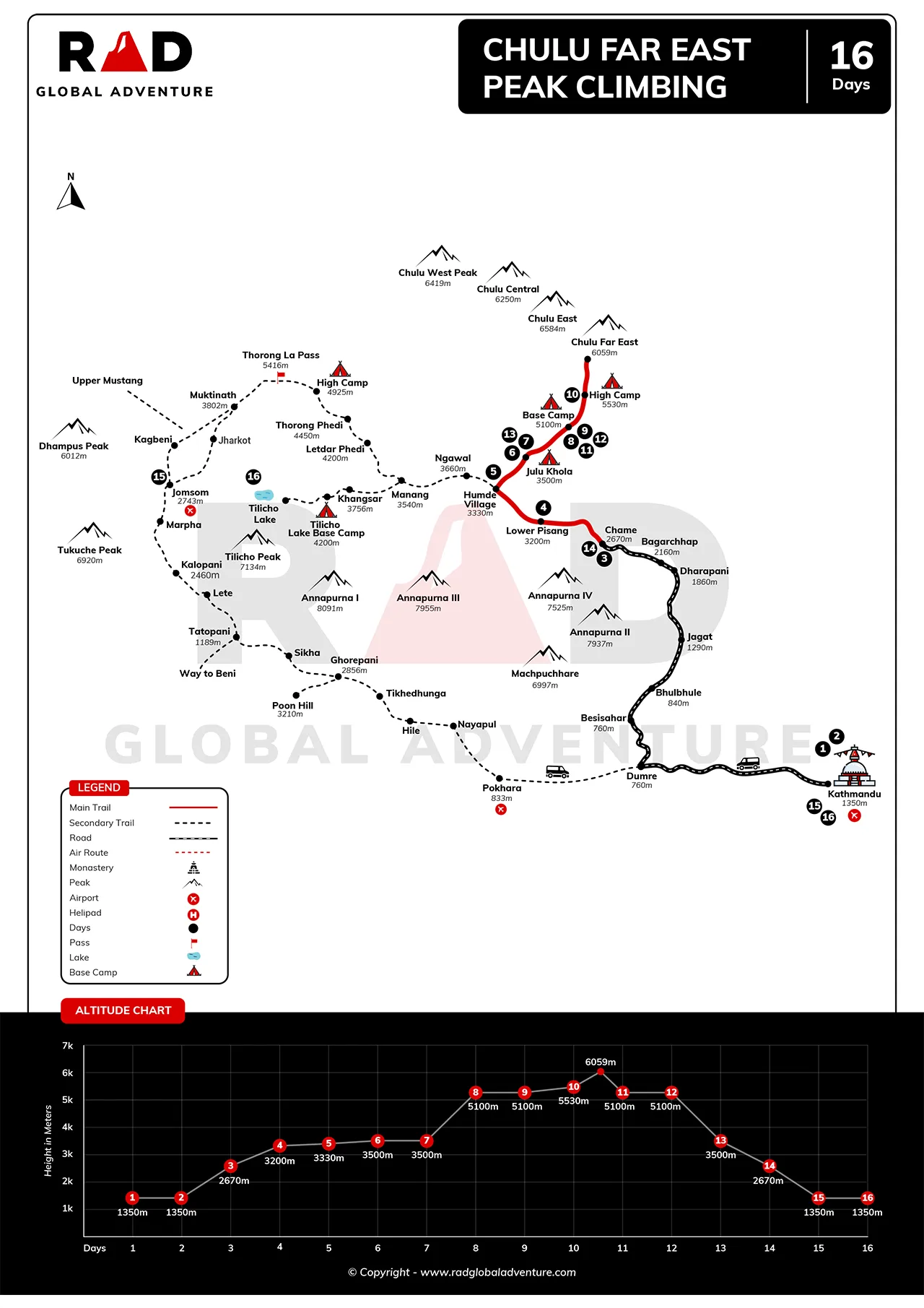
Route Map & Altitude Chart

Attractions and Highlights of Chulu Far East Peak Climbing

Kathmandu Valley Heritage Sites

Explore ancient temples and stupas in Kathmandu. Visit Swayambhunath for city panoramas after climbing steps, observe cremation rites at Pashupatinath along the river, and circle Boudhanath with pilgrims spinning wheels. We blend history lessons with practical tips on respect as you absorb Hindu and Buddhist influences. Sites date back centuries and draw millions of visitors yearly.

Scenic Marsyangdi Valley Drive

Journey from Kathmandu to Chame reveals diverse terrain. Wind through terraced farms and gorges on a 210-kilometer route. Descend to the lowlands, then climb into the pines. We take a break at the riverside for photos where you can spot waterfalls and upcoming villages en route. The road spans highways to jeep tracks, and takes a full day. This stunning transition from subtropical to alpine zones is a great start to the Chulu Far East Peak Climbing. Pack anti-nausea aids for twists. Admire the first Annapurna glimpses and stop in Besisahar for local tea.

Manang Valley Villages and Culture

Trek through Pisang and Humde for ethnic immersion, pass Gurung homes with stone walls and prayer flags, and engage locals over thukpa in teahouses. They share stories of Tibetan influences. You learn basic greetings to connect with the locals as the villages sit at 3,000 meters, preserving traditions amid peaks. Manang hosts ancient monasteries visited by thousands annually.

Panoramic Annapurna Massif Views

Witness sweeping vistas of Annapurna II, III, IV, and Gangapurna, from trails near Julu Khola, and also capture glacier scenes. We pause at viewpoints for optimal shots where you can frame Dhaulagiri on clear days. Peaks tower over 8,000 meters, forming the world’s tenth-highest range. You can use binoculars for detail as these sights motivate during ascents. Trek reveals changing angles daily.

Chulu Far East Base Camp Setting

Settle at 5000 meters above sea level amid moraines and streams. Erect tents near glacial features as we conduct training on snow slopes. You practice rope work with a team. The campsite offers solitude, less crowded than other peaks. You acclimatize with short hikes and observe blue sheep grazing in your free time. The base camp provides ideal prep for the summit. We are fueled with hot meals and monitor oxygen levels daily. This spot builds skills and rest as we share aspirations around the team.

Summit Achievement on Chulu Far East

Reach 6059 meters above sea level for the ultimate reward and climb roped on moderate grades with crampons. We guide through the final ridge, and you get to stand atop 360-degree panoramas, including Nilgiri and Machhapuchhre. The Chulu peak is classified as a trekking summit, accessible with climbing basics per the Nepal Mountaineering Association and our experienced guides. Celebrate the climax of the Chulu Far East Peak Climbing with photos and a celebratory dinner in Kathmandu.

Trip Information of Chulu Far East Peak Climbing

Is this trip beginner-friendly?

This trek challenges even experienced hikers. We recommend you have prior high-altitude trekking experience before attempting the Chulu Far East Peak Climbing. The summit day involves technical climbing at over 6000 meters. Beginners should consider less demanding peaks first. You need excellent physical fitness and stamina. Our itinerary includes acclimatization days, but the altitude poses a significant risk nevertheless. Prepare with months of cardiovascular and strength training. This journey suits those who have already completed treks above 5000 meters. It is not a first-time adventure.

Private trip vs Group Joining

A private trip offers a customized schedule and personal guide attention. You set the pace and can modify the itinerary. Group joining reduces costs through shared expenses like guides and permits. Our groups are small, typically under ten people, fostering a team environment. Private journeys provide flexibility for photography or extra rest days. Group trips follow a fixed schedule but offer built-in companionship. We find both options rewarding. Choose a private trek for a tailored experience or a group trip for social and economic benefits.

Trip Extension

You can extend your Nepal visit beyond this Chulu Far East Peak Climbing. We offer additions like a safari in Chitwan National Park or a tour to Pokhara. Another popular extension is a few days in Bhaktapur for deeper cultural immersion. Some clients add a shorter trek like the Ghorepani Poon Hill circuit. These extensions typically add three to five days to your trip. We handle all logistics including transportation and accommodations. Plan extensions before your arrival to ensure smooth arrangements. This allows you to see more of Nepal’s diversity.

Solo trek to the Chulu Far East Peak

Nepalese regulations require a licensed guide for all treks in restricted areas like this. You cannot trek completely solo to Chulu Far East. We provide experienced guides for safety and logistics. Solo travelers often join our group trips for companionship. A private solo trek is possible but involves higher costs for a dedicated guide and porter. The terrain and altitude make independent travel risky. Our guides manage permits, navigation, and emergency procedures. This ensures your safety and compliance with local laws. We welcome individual travelers on our scheduled departures.

Photography & Drone Rules

Carry extra batteries as cold drains power quickly. You capture stunning landscapes from Humde to the summit. Remember to respect local privacy when photographing people; always ask permission first. Drone use requires a special permit from the Nepal government. We assist clients with this process well in advance, but its a tedious and difficult process to complete. Flying drones near airports or military zones is prohibited. The high winds at altitude can make drone operation hazardous. We recommend a sturdy DSLR or any other camera with weather sealing. The light at high camp during sunrise offers incredible photo opportunities.

Cultural Festivals on the Trail

Your trek may coincide with local festivals like Dashain or Tihar. These Hindu celebrations often occur in autumn. Villages along the route might have small gatherings with music and dance. You witness traditional customs and colorful decorations. These events offer a unique cultural insight. We check festival dates when planning your trip. Respect local traditions by observing quietly unless invited to participate. The Manang region has its own distinct festivals. Your guide can explain the significance of any events you encounter. This adds a rich layer to your adventure.

Tips for First-Time Nepal Visitors

  • Obtain a visa on arrival at Kathmandu airport; bring passport, photos, and cash.
  • Use reputable money changers in Thamel for local currency.
  • Drink only bottled or purified water to avoid illness.
  • Pack layered clothing for varying temperatures.
  • Learn a few Nepali phrases like “Namaste” for greetings.
  • Respect local customs by dressing modestly in temples.
  • Stay hydrated and avoid altitude sickness by ascending slowly.
  • Kathmandu has intense traffic, so plan your drive to the airport with some extra minutes to spare.

Typical Daily Routine on the Trek

Your day starts with a warm breakfast at the teahouse around 6 AM. We begin walking by 7 AM to cover the distance before the afternoon winds. The morning trek lasts at least three to four hours. You stop for a hot lunch at a designated spot. Afternoon hiking is shorter, arriving at the next camp by 3 PM. Then you have tea and time to rest or explore. Dinner is served around 6 PM in the tea houses of camps. Our guide conducts a briefing for the next day. You sleep early to prepare for the next ascent.

Mental Preparation & Trekking Mindset

Accept that discomfort is part of the journey. You will face cold, fatigue, and challenging terrain. Focus on small goals like reaching the next rest stop. Practice mindfulness to manage stress at high altitudes. We encourage a positive attitude and teamwork. Visualize your success on summit day. Understand that weather may force itinerary changes. Patience is crucial for acclimatization. Trust your guides and their decisions. The mental challenge is as important as the physical one. Prepare by reading accounts of other climbers.

Frequently Asked Questions

The Chulu Far East Peak trek requires strong fitness and prior high-altitude experience. Daily treks last 5-10 hours on steep trails. Train at least nine weeks before with loaded hikes and cardio. Focus on endurance and leg strength.

Yes, you need TIMS, ACAP, and NMA climbing permits for the Chulu Far East Peak Climbing. We handle all the necessary paperwork. NMA permit costs USD 250 for groups of four or fewer. Verify document validity before departure and carry copies at all times to avoid issues.

Autumn (October to November) provides stable weather and clear mountain views. Spring (April to May) has warmer temperatures but occasional snow. These are the best seasons for the Chulu Far East Peak Climbing. Monsoon (June to September) brings heavy rain and landslides. Winter (December to February) has extreme cold and avalanche danger. Choose autumn for the best conditions.

Chulu Far East Peak stands at 6,059 meters (19,880 feet). The climb is non-technical but requires ice axe and crampon skills. Fixed ropes assist on the final ridge. Our team provides pre-summit training at base camp for all climbers.

Altitude sickness can occur at high elevations, drink 3-4 liters of water daily to lower the chances. Recognize symptoms: headache, nausea, dizziness, and more. Descend immediately if symptoms worsen. We build in acclimatization days for safety.

Essential gear includes a 4-season sleeping bag, a down jacket, crampons, an ice axe, a harness, and a helmet. Rent boots and poles in Kathmandu. Test personal gear before the trek. We provide group equipment such as ropes and expedition tents. Check all items thoroughly before starting.

Yes, travel insurance is mandatory. It must cover helicopter evacuation to 6000 meters. Most standard policies only cover up to 4,000 meters. We verify your insurance before departure. Ensure your policy meets these requirements for your safety.

Group size is typically 4-8 climbers. Our guide ratio is 6 climbers per guide above base camp. Solo travelers join existing groups or hire a private guide. Smaller groups ensure better safety and personalized attention.

Yes, we insure all guides and porters for medical and accident coverage. We pay fair wages according to the Nepal government rules. Tip guides and porters daily or bi-daily USD 5 daily if you are happy with their services.

Trip Reviews

expert-image
Need Help? Ask to Travel Expert
Get a Trip Quote Customize This Trip Make an Inquiry
  • Best Deal
  • Flexible Schedule
  • Instant Booking
  • No Hidden Costs
trip-advisor
5.0
25 reviews