Jamacho Gumba: The Hidden Monastery Above Kathmandu Valley
11 November, 2025
By RAD Global
Jamacho Gumba is a serene Tibetan Buddhist monastery perched high on Nagarjuna (Jamacho) Hill, just northwest of Kathmandu. Inside Shivapuri Nagarjun National Park, the hike to Jamacho winds through the sacred “Queen’s Forest” (Rani Ban) and emerges at a peaceful shrine. Named for the Buddhist sage Nagarjuna, who is said to have meditated in these hills, Jamacho Gumba offers hikers a taste of Himalayan spirituality right above the city.
Panoramic Views of Kathmandu from Jamacho Gumba, Nagarjuna Hill
From the forest trail, you are rewarded with sweeping views of KathmanduValleyand distant snow-capped peaks, making the effort well worth it. At the summit sits a modest monastery adorned with prayer wheels, statues, and fluttering prayer flags – a place where locals have prayed and meditated for generations.
Getting to the Trailhead
The official trailhead for Jamacho Gumba is at FulbariGate(Balaju), the entrance to Shivapuri Nagarjun National Park. From central Kathmandu (Thamelarea), it’s only a short drive west to Balaju Fulbari Gate.
Taxis and local buses run toward Machhapokhari/Balaju (via Kalanki), where you can walk (10–15 min) to the park ticket counter at Fulbari. At the gate, you will pay the park entrance fee (NPR 1000 for foreigners) and should show your passport or ID.
The Nepal Army at the checkpoints will often check bags – no littering or loud music is allowed inside the park. Some hikers recommend hiring a licensed guide at this point, since park rules can require guides or groups for foreign visitors.
If you go on your own, make sure at least two people enter together for safety and to satisfy park guidelines. After entering, the trail begins through a shaded pine and rhododendron forest.
Hiking Route, Duration, and Difficulty
The Jamacho Gumba trail is a well-marked day-hike of moderatedifficulty. From Fulbari Gate, you climb steadily through the Rani Ban (Queen’s Forest) area. The walking distance to the monastery is about 5 km one way (roughly 10 km round-trip) via a stone-step path, as one guide notes. In practice, most fit hikers take about 3–4 hours to ascend and another 2–3 hourstodescend.
All told, plan on 5–6 hours round-trip at an average pace. The elevationgain is from 1300m at the park entrance to about 2,128 m at Jamacho Gumba. While the trail is fairly steep in places, it is not highly technical – it’s rated moderate and suitable for beginners with reasonable fitness.
Along the way, you’ll cross a few army checkpoints and may pass small shrines. Part of the route follows stairs and old forest paths; one report mentions a section past “Buffalo-Buddha” meditation caves and some steep, slippery stretches.
Take your time on the uphills and enjoy the forest – the first rewarding vista of Kathmandu usually appears after 2–3 hours of climbing. At the top (Jamacho Hill), there is also a modest view tower next to the monastery that offers 360° panoramic views of the Kathmandu Valley and Himalayan foothills.
What to Bring and Practical Tips
Prepare as you would for any Himalayan day hike. Key items include:
• Water & Snacks: Pack at least 2–3 liters of water per person and some energy-rich snacks or a light lunch. There are no shops or springs on the trail. (In fact, local advice warns that water sources are scarce, so carry extra water.)
• Clothing & Footwear: Wear sturdy hiking shoes with good grip and comfortable, breathable layers. The temperature can be cool under the forest canopy and wind on the ridge, so a fleece or windbreaker is wise (especially outside spring/autumn). Sun protection is a must: bring a hat, sunglasses, and sunscreen. In winter, it can be quite chilly at 2100m, and in summer, bring insect repellent (mosquitoes and leeches may be present). Trekking poles or a walking stick can help on the steeper sections (some local hikers even suggest carrying a sturdy stick for the climb).
• Navigation & Permits: The trail is well marked, but carry a map or GPS app as backup. At the gate, you must buy a park entry permit and ticket – currently NPR 1000 per foreigner. Keep these handy, as soldiers check them at checkpoints along the route. Also, bring your passport or a copy for ID.
• Other Essentials: A small first-aid kit, a camera, and cash (for entry fees and any snacks at the top) are good ideas. Light rain gear can be useful if hiking in the monsoon season. Follow Leave-No-Trace rules: carry out any trash and speak softly once inside the park. The Army staff will enforce park rules, so do not pick plants or litter.
Best Time to Visit
The Jamacho Gumba hike is best in spring (March–May) and autumn (September–November). These seasons offer clear skies, blooming rhododendrons, and mild daytime temperatures.
One trekking blogger notes that in autumn, they found “clear skies and temperatures just right” for the hike. Winter (December–February) can be quieterand cooler; an occasional dusting of snow is possible, but many trekkers enjoy the solitude of a cold, clear day.
Summer (June–August) is generally the leastfavorable: heavymonsoonrains make the forest slippery, and mosquitoes are abundant.
If you hike in winter, start after sunrise (mid-morning) to avoid the morning chill. In the monsoon, check weather forecasts and prepare for muddy trails. Regardless of season, it’s wise to start early (e.g., before 8 am) so that you descend well before dusk.
Forest, Wildlife, and Views on the Trail
Panoramic Views of Kathmandu from Jamacho Gumba, Nagarjuna Hill
The hike to Jamacho Gumba is as much about nature as it is about the destination. Much of the trail climbs through Rani Ban (Queen’s Forest) – a lush stand of fir, pine, rhododendron, and other Himalayan trees. Birdsong is constant, and if you’re quiet, you may spot colorful pheasants, butterflies, and even monkeys and deer.
According to one source, over 300 bird species are recorded here. The forest floor is often carpeted with ferns and medicinal herbs; look up to see sunbeams filtering through tall trees. (Be aware of leeches in wet sections, and watch your step on exposed roots after rain.).
Along the way, you will pass small shrines and meditation caves – reminders that this is a sacred landscape. For example, some hikers mention an old “Buffalo Buddha” cave where a monk once meditated.
As you climb higher, the forest opens up: occasional gaps in the trees afford panoramic views of Kathmandu Valley. From Nagarkot ridge on clear days, you can see the sprawl of Kathmandu city below, and on the far horizon the Langtang, GaneshHimal, and even Manasluranges.
As you near the summit, prayer flags marking the monastery come into view. One blogging trekker vividly describes reaching the top: “the majestic view of the mountains and Kathmandu Valley…we felt that all our effort was worthwhile”. At the very top – beside the small view tower – the world opens 360°.
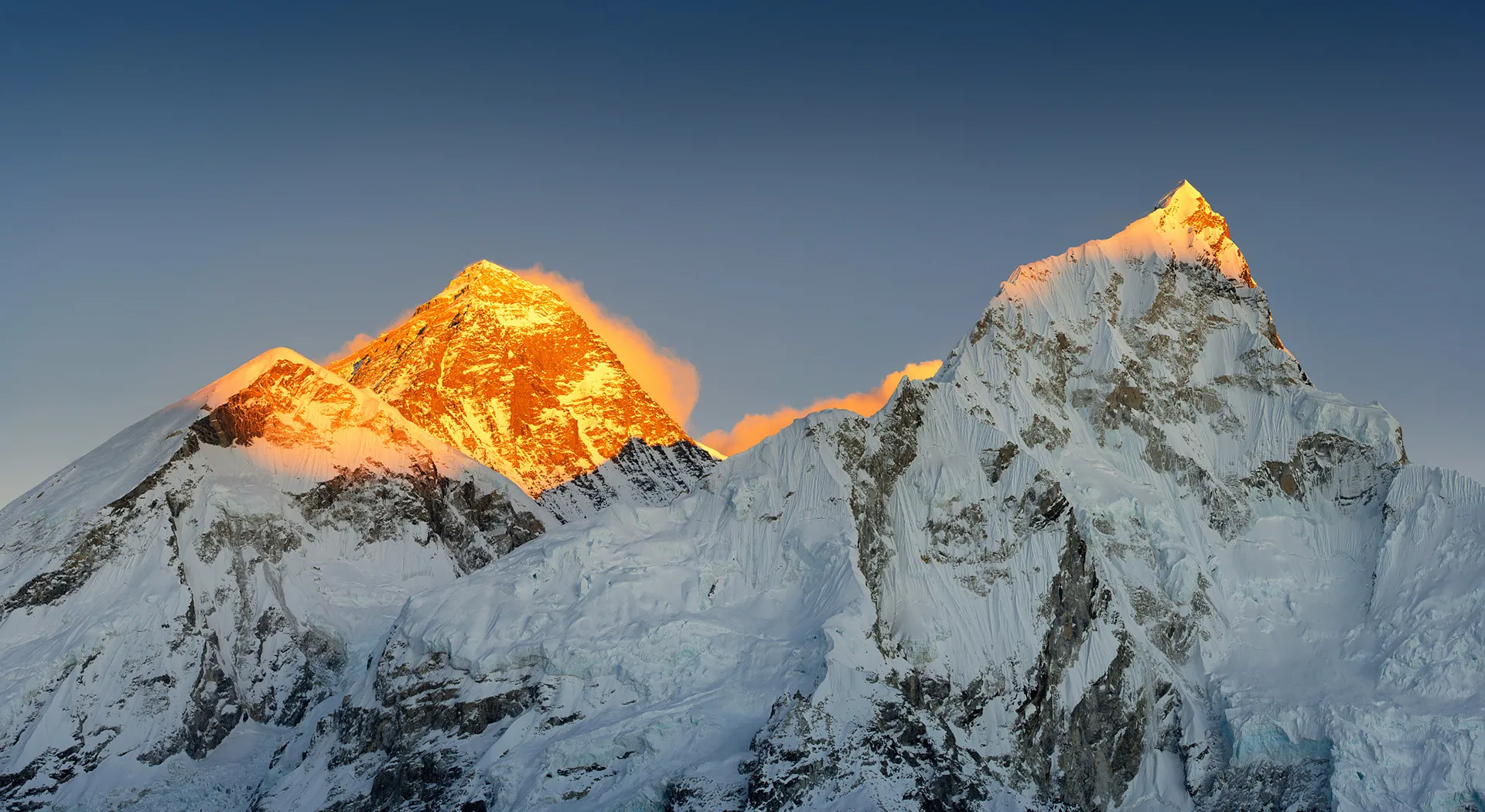
You can see the Kathmandu sprawl at your feet, with weathered forested ridges all around and snowy peaks in the distance. This is a classic Himalayan panorama: Everest and Kanchenjungaare far to the southeast, but Ganesh Himal, Langtang, and more prominent ranges are visible on a clear day. Many hikers linger here with their cameras, as the viewpoints are ideal for photos.
Jamacho Gumba Monastery: A Spiritual Summit
At the crest of Nagarjuna Hill sits Jamacho Gumba, a small Tibetan-style monastery. It’s an oasis of calm after the climb. The complex is modest – a few red-roofed gompa buildings, painted prayer wheels, carved Buddhas and guardian deities, and rows of fluttering prayer flags. Despite its size, locals consider it an important sacred site.
Inside the gompa, you’ll often find a monk or two in saffron robes. Visitors are welcome to spin the prayer wheels and add a prayer to the walls (be sure to remove your shoes first). Take time to walk around the compound: intricate murals depict Buddhist lore, and hanging strings of red-and-white mani stones line the paths.
Outside, hundreds of multicolored prayer flags flap in the mountain breeze – symbols of peace and compassion. These flags are more than decoration; they bless the surrounding area as they flutter.
Many Nepali Buddhists and pilgrims come here year after year to meditate or pray, especially on full-moon days. In fact, local legend ties the monastery to ancient lore: the wooded ridges of this hill are said to resemble the pleated skirt of a masked dancer (a “jama” in Tibetan), which is how the name Jamacho originated.
On the full moon of April, devotees climb Jamacho Hill for traditional ceremonies commemorating Buddhist creation myths. And because the area is named for Nagarjuna, one of India’s greatest Buddhist philosophers, the site has long attracted seekers of wisdom. According to tradition, Nagarjuna himself meditated in the caves of this hill, giving it enduring spiritual significance.
In short, Jamacho Gumba is not just a scenic spot but a living temple. Many trekkers describe the atmosphere as “calm,” “serene,” and deeply peaceful. You might hear monks chanting or see local pilgrims circumambulating the stupa. This sense of quiet reverence, high above Kathmandu, is a highlight of the hike.
Safety and Practical Tips
Even though Jamacho is a short, well-marked hike, take normal mountain-safety precautions. Tell someone your plan and ideally hike with a partner. (Nepal’s national park rules often require foreigners to have a companion or guide.) Carry a fully charged cell phone. Roads to Balaju are good, but the forest trail can have loose rocks or slippery mud, so step carefully, especially on the descent.
Avoid hiking in darkness – the trail has limited lighting, and jungle wildlife (monkeys, barking deer, even the occasional leopard) could be active at dusk or dawn.
Watch the weather: if rain is forecast, be extra careful on muddy sections and consider postponing. Early in the season, parts of the trail can be dusty; later in the monsoon, they’ll be slippery. Always keep your park permit (ticket) and ID on you – soldiers on the trail may ask to see them. Stick to the main path: there are very few forks, but venturing off-trail is discouraged.
A few additional tips from local hikers: there is no potable water source on the way, so drink up before you start and carry extra water. At the summit, you’ll find a small stand selling tea or instant noodles, but expect high prices – better to have snacks of your own.
There are no public toilets along the hike (aside from possibly one at the park gate), so plan accordingly. Finally, be prepared for Army “gate checks” on the way up and down; they are routine and part of park management, so just have your permit ready.
Jamacho Gumba Versus Other Kathmandu Hikes
Kathmandu Valley is ringed by many popular day-hikes, and Jamacho Gumba is one of the most rewarding for its length. For context: ChandragiriHill (20 km west of Kathmandu) is another easy short hike (or cable car ride) to a 2551m summit with a Shivatemple. Chandragiri is more commercial (with cable cars, a resort, and crowds), whereas Jamacho is quieter and more forested.
Phulchowki(2752m) is higher and far more strenuous, requiring a longer trek. Nagarkotoffers famous sunrise views, but you typically drive to Nagarkot, unlike Jamacho, where you do the full climb on foot. ShivapuriPeak (2732m) has multiple paths and a Buddhist nunnery (Nagi Gompa), but that route is longer (often 8+ hours).
In comparison, Jamacho Gumba is shorter (half-day) and combines dense forest with a monastery – somewhat akin to the Chisapani/Nagarkot ridge trek, but done in a single outing. It’s also closer to the city (just 8–10 km from Thamel) than some of the outer hills.
In short, Jamacho is an ideal quick escape: it has more spiritual ambiance than, say, the concrete steps of Chandragiri, yet is easier than a full Shivapuri summit hike. Many hikers conclude that if you only have one day for a Kathmandu hike, Jamacho Gumba “truly blends cultural exploration and natural beauty” into a memorable experience.
Final Thoughts
Jamacho Gumba offers a perfect balance of adventure, nature, and culture for international visitors. The trail immerses you in Kathmandu’s only national park, and the payoff is spectacular. Standing by the monastery at over 2,100 meters, turning the prayer wheels under the clear blue sky, and watching the wide valley below feels peaceful and truly rewarding.
Whether you come for the Himalayan vistas, the cool forest shade, or the chance to touch a piece of Buddhist heritage, Jamacho Gumba delivers. It’s not a crowded tourist spot, but exactly that makes it special: a hidden monastery where you can feel truly away from the bustle of Kathmandu.
If your Nepal itinerary allows even a few hours for a local trek, don’t miss this “holy mountain” hike just outside the city. You’ll return with fresh air in your lungs, stunning photos of valley panoramas.
 English
 Dutch
Dutch Japanese
 Hindi
Hindi Italian
 Spanish
 French
 German
 Chinese
 Korean
 Arabic
 Hebrew
 Russian
 Portuguese
 Danish
 Czech
Czech Polish
 Swedish