How Cold Is Mount Everest? Complete Temperature Guide for Every Altitude
28 November, 2025
By RAD Global
Mount Everest is the highest mountain on Earth, but it is also one of the coldest and harshest places a human can stand. Many people ask, “How cold is Mount Everest really?” The short answer is that Everest is cold enough to freeze exposed skin in seconds and cold enough to turn water bottles into solid ice overnight.
Even during the warmest months, the temperature at the summit never rises above freezing. In the deep winter months, the top of Everest can drop to about minus 60 degrees Celsius, which is dangerous for anyone who is not completely protected. However, the temperature numbers by themselves are not sufficient. Everest is even colder in the thin air, strong winds, and great wind chill.
Such extreme conditions have made Everest the Third Pole. In this easy and courteous manual, we are going to hike, step by step, to Everest Base Camp to the summit and discuss the temperature at each point. You will know the average temperature of spring, summer, autumn, and winter, and why the cold keeps changing so rapidly as you go up the mountain.
How Altitude and Season Affect Everest Cold
Before we explore each altitude, it is important to understand why Everest is extremely cold. The main reason is altitude. As you climb higher, the air becomes thinner and loses its ability to hold heat.
On Everest, the temperature generally drops about six to seven degrees Celsius for every one thousand meters you climb, although this can vary depending on weather and wind. This means that when Base Camp is cold, Camp Four will be much colder even on the same day.
Everest also creates its own weather. The mountain rises so high that strong winds often blow across the upper slopes. These winds can easily reach one hundred sixty to two hundred eighty kilometers per hour in winter.
When the wind blows at these speeds, even a temperature of minus thirty degrees Celsius can feel like minus fifty degrees Celsius or even colder. This powerful wind chill can freeze skin in seconds.
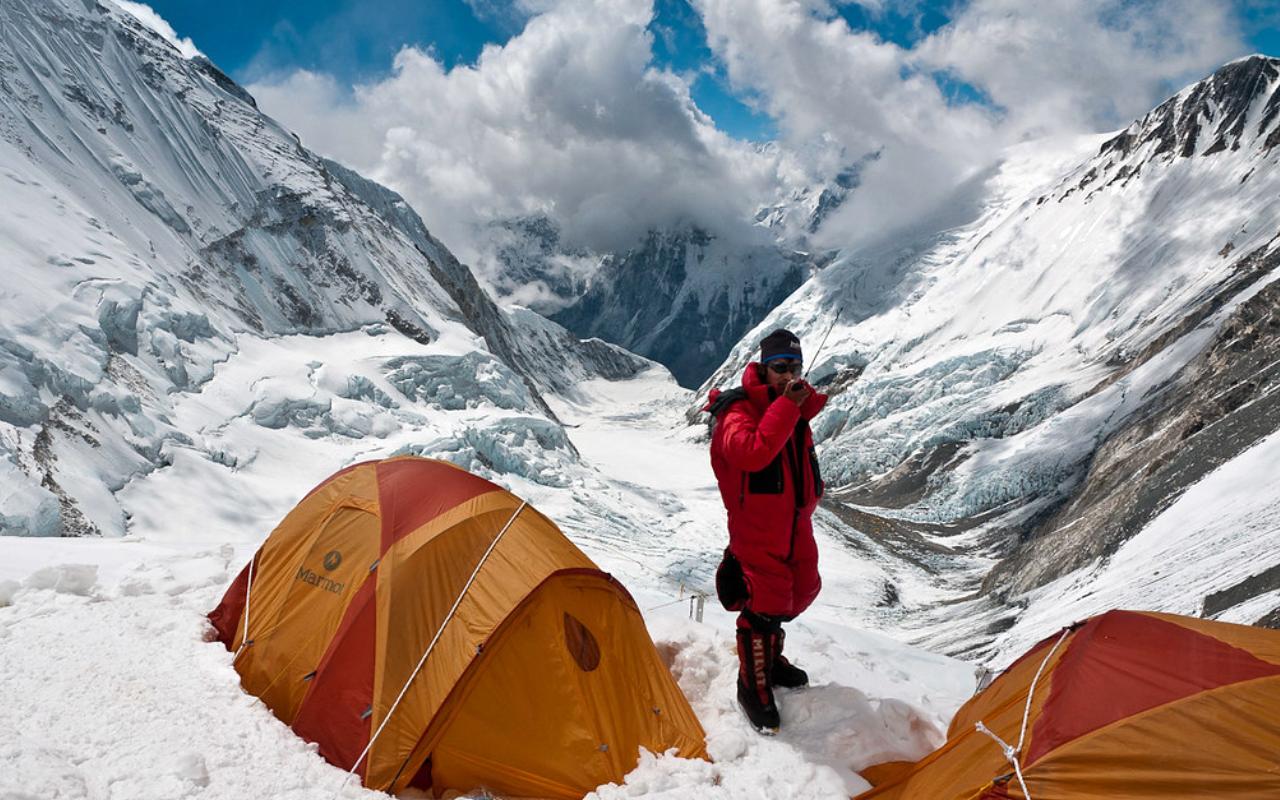
The Western Cwm, which is the valley above Camp One, traps sunlight and sometimes becomes warm during midday. However, this warmth disappears the moment the sun goes down. Winter brings clear skies and freezing days when the jet stream moves directly over Everest.
Spring and autumn are calmer and more stable, which is why these two seasons are the most popular for climbing. Summer is slightly warmer but full of clouds, snow, and rain due to the monsoon.
How Cold Is Mount Everest at Base Camp (5364 m)
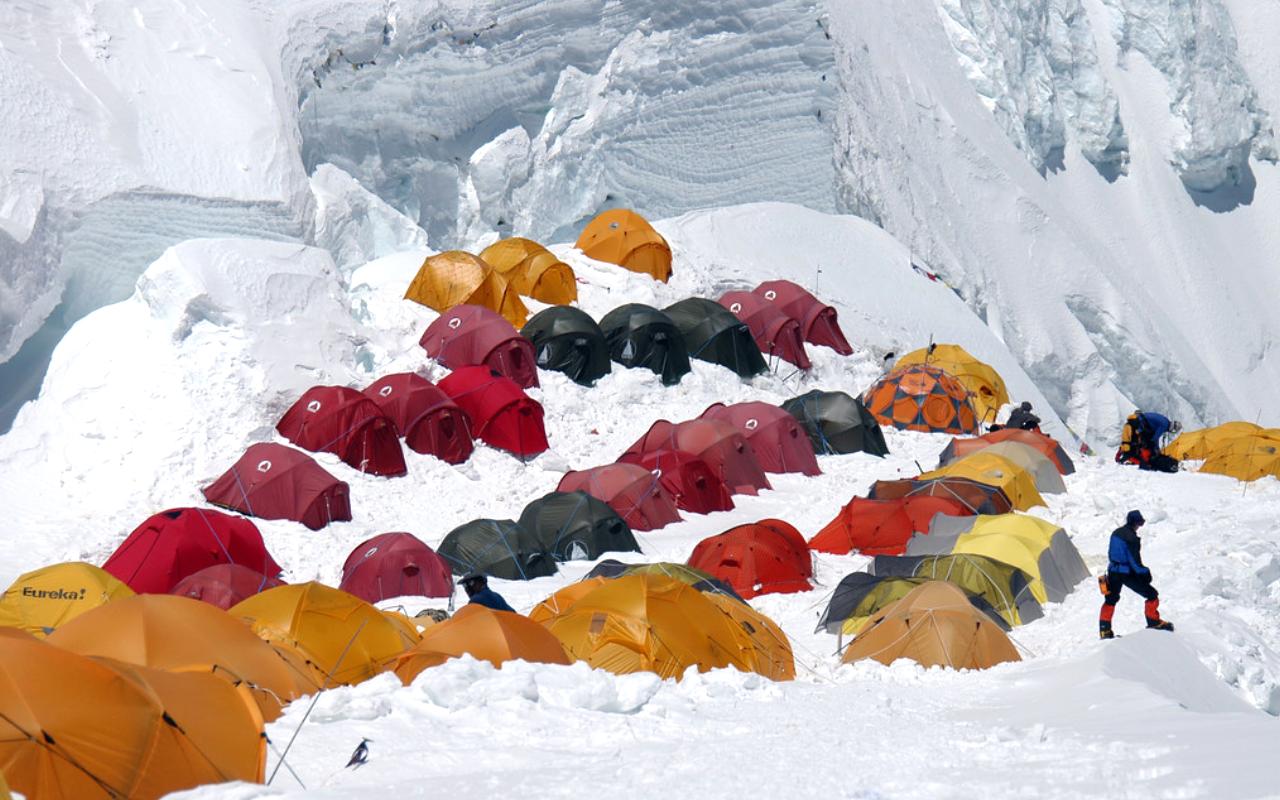
Everest Base Camp
Base Camp Everest is located on the Khumbu Glacier and is approximately at five thousand three hundred and sixty-four meters high. It is a tourist hub with trekkers and the starting point for climbers who are going to the top. Base Camp is cold, but not as high as the high camps. The valley provides a slight shelter against the wind, and on sunny days, the weather is warmer.
But as soon as the sun goes down, the temperatures drop swiftly, and nights are very cold. Water freezes, and frost in the morning is a common occurrence on the tents. Base Camp provides an initial exposure to the severe environment that will be encountered further up on the mountain by the climbers.
Spring
Spring is one of the best times to be at Base Camp. Clear skies and stable weather are common. Daytime temperatures can reach ten to fifteen degrees Celsius on sunny afternoons, which feels warm enough to sit without a jacket.
Nights are still cold and often fall to around minus ten to minus fifteen degrees Celsius. Mornings are frosty, and you may see ice on your tent. The general temperature in spring stays near zero, getting warmer toward May.
Summer
Summer is the warmest season at Base Camp, but also the wettest because of the monsoon. Temperatures can reach fifteen degrees or more on rare sunny days. Nights stay close to freezing and sometimes slightly above.
However, thick clouds often cover the camp and make everything feel damp and chilly. The monsoon also brings rain lower down and snow at Base Camp. Climbing is very limited at this time because the weather is too unstable.
Autumn
Autumn is another excellent season for trekking. The weather becomes dry, the skies turn clear, and the views are beautiful. In September, daytime temperatures can reach ten to fifteen degrees Celsius.
As November approaches, the temperature drops, and days may reach only around zero degrees Celsius. Nights commonly fall below minus fifteen degrees Celsius. Autumn feels crisp but pleasant for most trekkers.
Winter
Winter at Base Camp is very cold and very quiet. Most trekkers avoid this season. Daytime temperatures often stay between minus five and minus ten degrees Celsius. At night, the temperature falls to minus twenty degrees or lower.
Some nights in December and January can reach minus twenty-five degrees. The sky is often very clear, and the stars appear bright, but the air is extremely cold. Water freezes quickly, and you need warm sleeping bags and layers to spend the night here.
Even at Base Camp, the cold is strong enough to freeze water bottles if they are not kept inside your sleeping bag. This is only a preview of the colder conditions ahead.
How Cold Is Mount Everest at Camp One (6065 m)
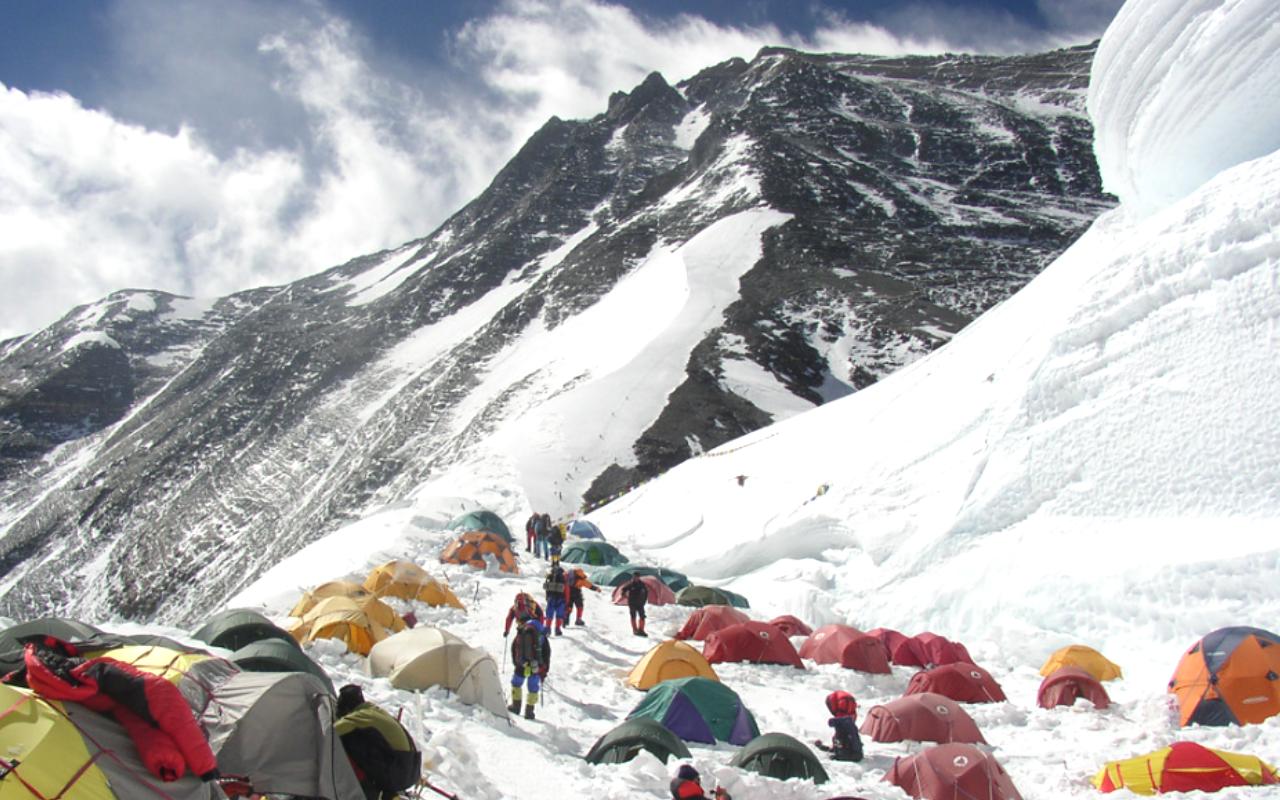
Camp I, Mount Everest
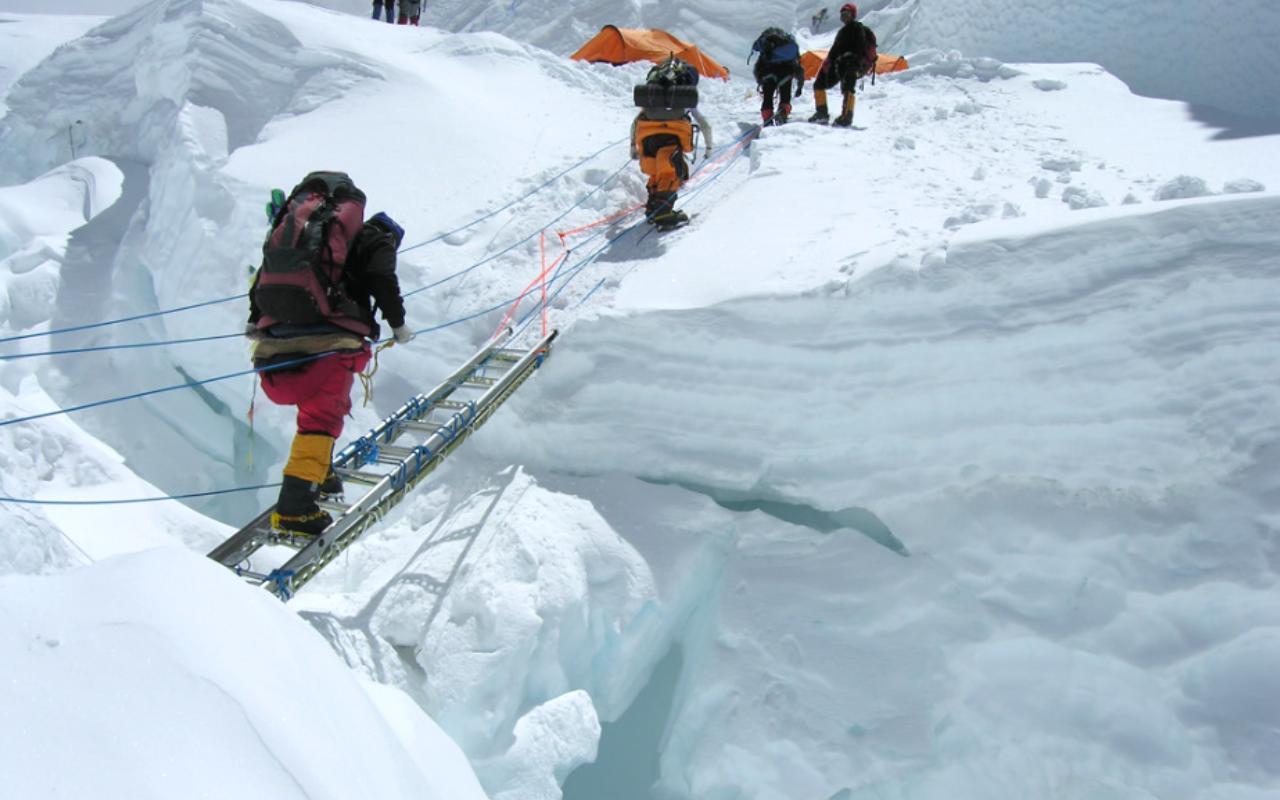
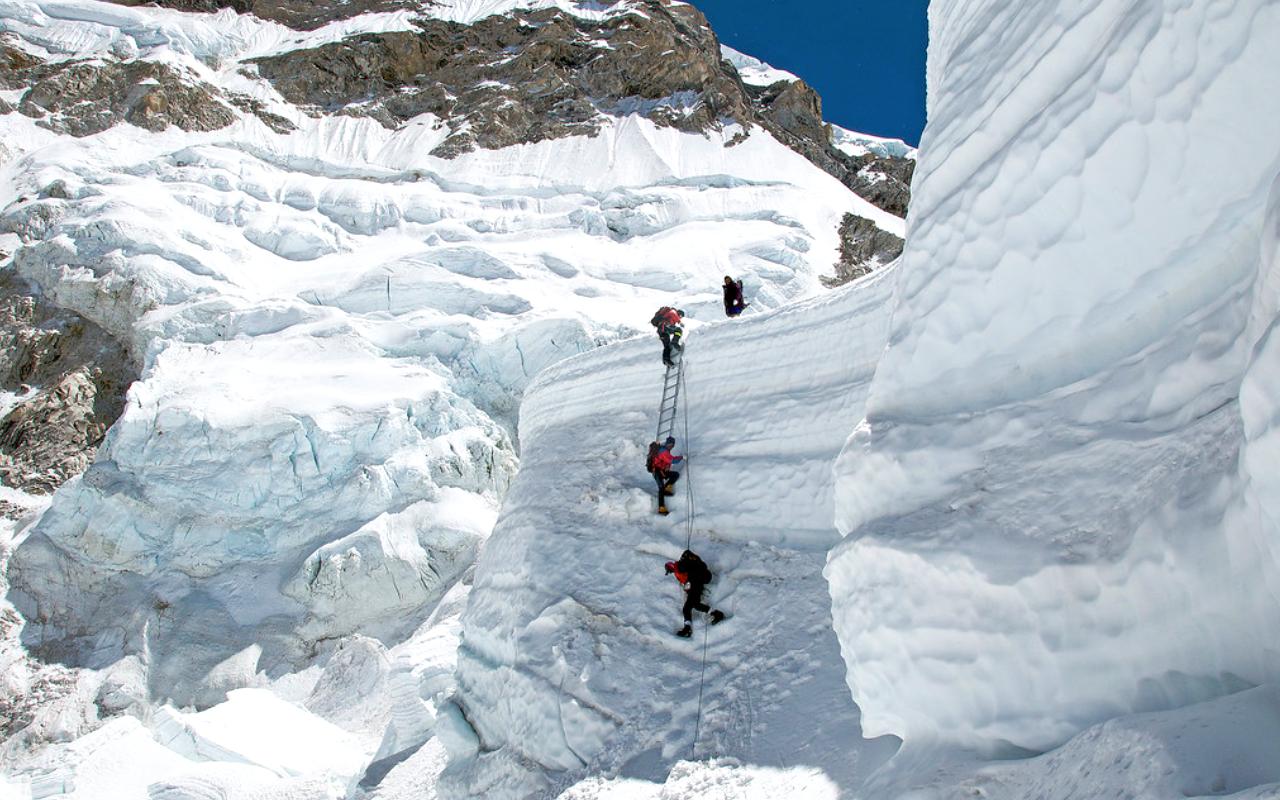
Camp One is above the Khumbu Icefall and is the first step in the higher portion of Mount Everest. It is noticeable how the temperature changes after over seven hundred meters above Base Camp. The air is thinner and sharper, and the cold comes down much quicker.
Although this is positioned within high walls of ice, the Western Cwm forms a hole that captures sunlight towards the end of the day in the morning.
When the weather is very quiet and sunny, a tent interior may impress one with a few minutes of very warm rest, which provides climbers with a short rest in the cold. But this warmth is very brief.
Immediately, the sun sets behind the peaks surrounding it, and the temperature decreases. The camp is chilled, the ice becomes hard, and a chill runs down the valley. Camp One is particularly rough in terms of nights as the heat moves away fast in the slim air.
The water bottles will be frozen, the climbing equipment will be stiff, and even the sleeping bags may get cold unless they are well insulated. The cold in this place is not as extreme as it is in the higher camps, but it is great enough to let the climbers know that they are getting into a much more severe environment.
Climbers usually get the first lesson in Camp One on why the weather can change so fast and the importance of keeping oneself warm at all times, even when out in the cold.
Spring
In spring, Camp One is usually set up in April. On sunny days, tents can become warm inside and may reach zero degrees or a few degrees above. Climbers sometimes rest in lighter clothing during midday. But once the sun stops shining, the temperature drops rapidly. Nights fall to about minus fifteen degrees or lower. Any melted snow turns into ice overnight.
Summer
The monsoon makes Camp One cloudy, snowy, and damp. A rare sunny day may warm the tent slightly above freezing, but most days stay around minus five degrees. Nights may stay near minus ten degrees. The humidity makes the cold feel deeper because wet clothing loses heat faster.
Autumn
In early autumn, Camp One can feel similar to spring. The sun may warm the tents close to freezing. Nights fall to about minus ten to minus fifteen degrees. By late autumn, the temperature drops much more, and nights may reach minus twenty degrees.
Winter
Winter is severe at Camp One. Daytime highs may reach only minus fifteen degrees. Strong winds blow through the Western Cwm and remove any warmth from the sun. Nights can fall to minus twenty-five or minus thirty degrees.
Everything becomes frozen and hard, including ropes and tents. Camp One is the place where climbers begin to feel the true cold of the upper mountain.
How Cold Is Mount Everest at Camp Two (6400 m)
Camp Two, also known as Advanced Base Camp, is located deep within the Western Cwm and is just below the towering Lhotse Face. The cold here is much greater, but the atmosphere is peculiar.
The camp is encircled with huge ice walls that reflect the sunlight in the day, and at no distant moment form a warm pocket of air in the afternoon. Even on bright days, the climbers can sit in their tents and experience some form of a warm breeze, almost a small reprieve from the chilly mountain wind.
This comfort does not last long. The minute the sun sets behind the high ridges, the temperature falls very rapidly, and the camp can be warm one moment and freezing the next. The thin air fails to retain heat, and thus nights in Camp Two are very cold.
All the items become frozen: the boots, the ropes, and even the cooking gear. It is more difficult to breathe, and the cold is more pronounced, as oxygen content is far lower than it was at Camp One.
Camp Two is a major acclimatization spot, and therefore the climbers usually spend some days here. They learn to cope with the cold, water by melting snow, and they are conditioned to the colder temperatures above.
Many people consider Camp Two as the final stop in the mountains, where they can experience a short moment of warmth. At this stage, the ascent turns a lot more serious, and cold becomes an inseparable element of the process.
Spring
During the main climbing season of April and May, tents at Camp Two can feel warm, sometimes even a few degrees above freezing. Outside the tent, temperatures might stay close to zero in the sun. The warmth disappears fast once the sun sets. Nights usually fall to minus twenty degrees, and in early spring, they may reach minus thirty degrees. Every morning, tents and gear are covered in a layer of ice.
Summer
Few climbers stay at Camp Two in summer because of the monsoon. Temperatures may reach zero on rare sunny moments, but usually daytime stays around minus five to minus ten. Nights stay near minus fifteen or slightly warmer if clouds trap heat. Everything stays wet, and clothes never fully dry.
Autumn
Autumn begins warm and ends very cold. In September, daytime temperatures might touch zero in the sun, and nights fall to around minus fifteen. By October and November, daytime highs stay well below freezing, and nights may reach minus twenty-five or minus thirty degrees.
Winter
Winter brings severe cold to Camp Two. Even during daylight, temperatures may stay around minus twenty. Nights can fall to minus thirty-five or lower. With wind chill, it can feel close to minus fifty.
These conditions make frostbite a serious danger. Camp Two is one of the last places on Everest where you might feel any warmth from the sun, but the nights are long, cold, and difficult.
How Cold Is Mount Everest at Camp Three (7200 m)
Camp III, Mount Everest
Camp Three is a very difficult and memorable location on the whole Everest route. It is approximately seven thousand two hundred meters on the steep icy wall referred to as the Lhotse Face. Here, the climbers obtain their sleep on little ledges cut out of hard blue ice.
The camp is quite open to the cold, wind, and fine air. Soft surfaces do not exist; there is no protection against cliffs, and the elements are not covered. Everything is acute, frozen, and brittle here.
Camp Three is much colder than at Base Camp or even Camp Two. The level of oxygen at this elevation is so low that the human body finds it difficult to keep warm, even when you are clad in clothes.
You move slowly, breathe heavily, and the cold penetrates your body much faster. Any little carelessness, such as removing your gloves to take a minute, can result in frostbite.
Below is a detailed look at how cold Camp Three becomes in each season.
Spring
In late April and early May, the sun may warm the tents to about minus ten degrees. Outside the tent, temperatures usually stay around minus fifteen. Nights fall to minus twenty-five or minus thirty. Climbers often wake up to find their breath frozen into ice crystals on the tent walls.
Summer
Camp Three is almost never used in summer. If someone were there, they would find heavy clouds, constant snow, and temperatures around minus eighteen during the day and minus twenty-five or lower at night.
Autumn
September brings conditions similar to spring. Daytime temperatures may reach minus ten when the sun hits the face. Nights go down to minus twenty-five. In October and November, temperatures fall even more. Days often stay colder than minus fifteen, and nights reach minus thirty-five or lower.
Winter
Winter at Camp Three is extremely difficult. Daytime highs may only reach minus thirty. Nights often drop to minus forty or even lower. Winds are strong, and frostbite can happen almost instantly on exposed skin. Camp Three is a place where the cold becomes life-threatening, and every movement must be done with care.
How Cold Is Mount Everest at Camp Four (7900 m)
Camp Four is located on the South Col at approximately seven thousand and nine hundred meters above sea level and is reported to be one of the most chilled and uncompromising locations on the whole mountain. This is where the mountaineers get into the Death Zone, which is the altitude at which the human body is unable to replenish oxygen, and it cannot live long without additional oxygen.
The camp lies on a flat, broad saddle in front of Mount Everest and Lhotse, and therefore, there is no natural defense against the wind. Powerful winds blow by the South Col through day and night, and the cold becomes even more severe.
The temperatures down here can remain very low (below freezing point), and even the simplest things like tying shoelaces, having a snack, or inspecting the equipment can become hard due to the fact that your hands lose their warmth nearly instantly.
At Camp Four, the air is so thin that the body is hard put to keep warm, and even the sun will only give some little relief. All of this will freeze in a short time, even water bottles and climbing ropes, and at times even oxygen equipment.
The majority of climbers spend little time in this place, having a quick break after which they begin their summit attempt. The chill of Camp Four is not a thermometer reading; it is a continuous stress on body and mind, as each climber is struck with the fact that he is at the border of human existence.
Spring
Late May brings the best summit weather. On calm days, daytime temperatures at Camp Four may reach about minus twenty degrees. Climbers arrive in the afternoon and try to rest before leaving for the summit at night. Nights often fall to minus thirty or minus thirty-five. The descent of the temperature during the night is fast, and climbers must wear every layer they have.
Summer
Summer is not suitable for climbing to Camp Four. Daytime temperatures remain around minus twenty to minus twenty-five, and nights fall to minus thirty. Heavy storms make the col unsafe.
Autumn
September can offer conditions similar to late spring. Daytime temperatures might reach minus twenty. Nights fall to about minus thirty. In October and November, conditions become almost like winter. Days often stay colder than minus twenty-five, and nights approach minus forty.
Winter
Winter at Camp Four is one of the coldest environments on Earth. Daytime temperatures may remain around minus thirty five and nights fall below minus forty-five. Winds often blow at very high speeds, and the wind chill can make it feel like minus seventy degrees.
Staying here for long is extremely dangerous. Camp Four tests the limits of human survival and is one of the most difficult places climbers will ever experience.
How Cold Is Mount Everest at the Summit (8848 m)
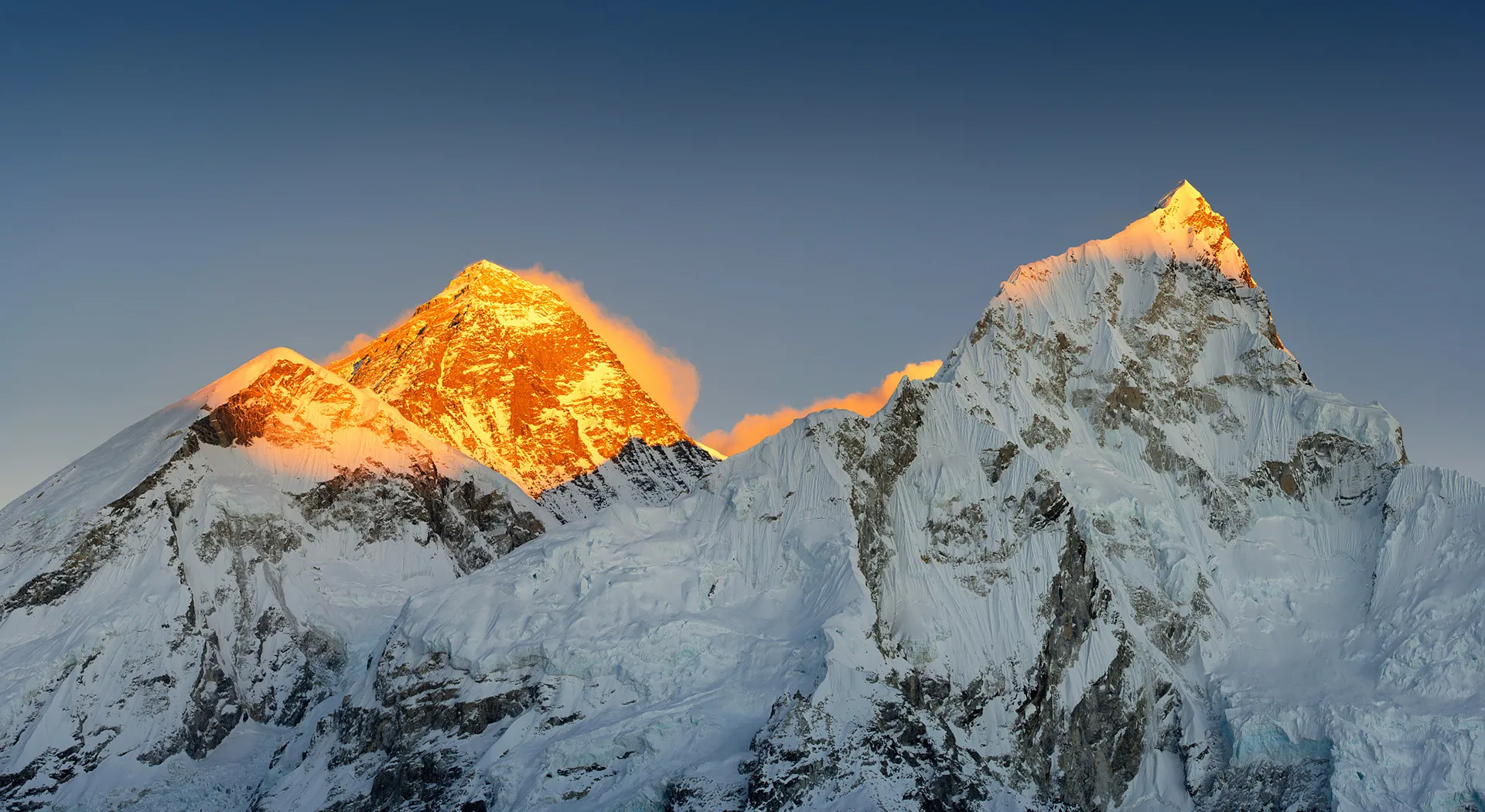
Mount Everest
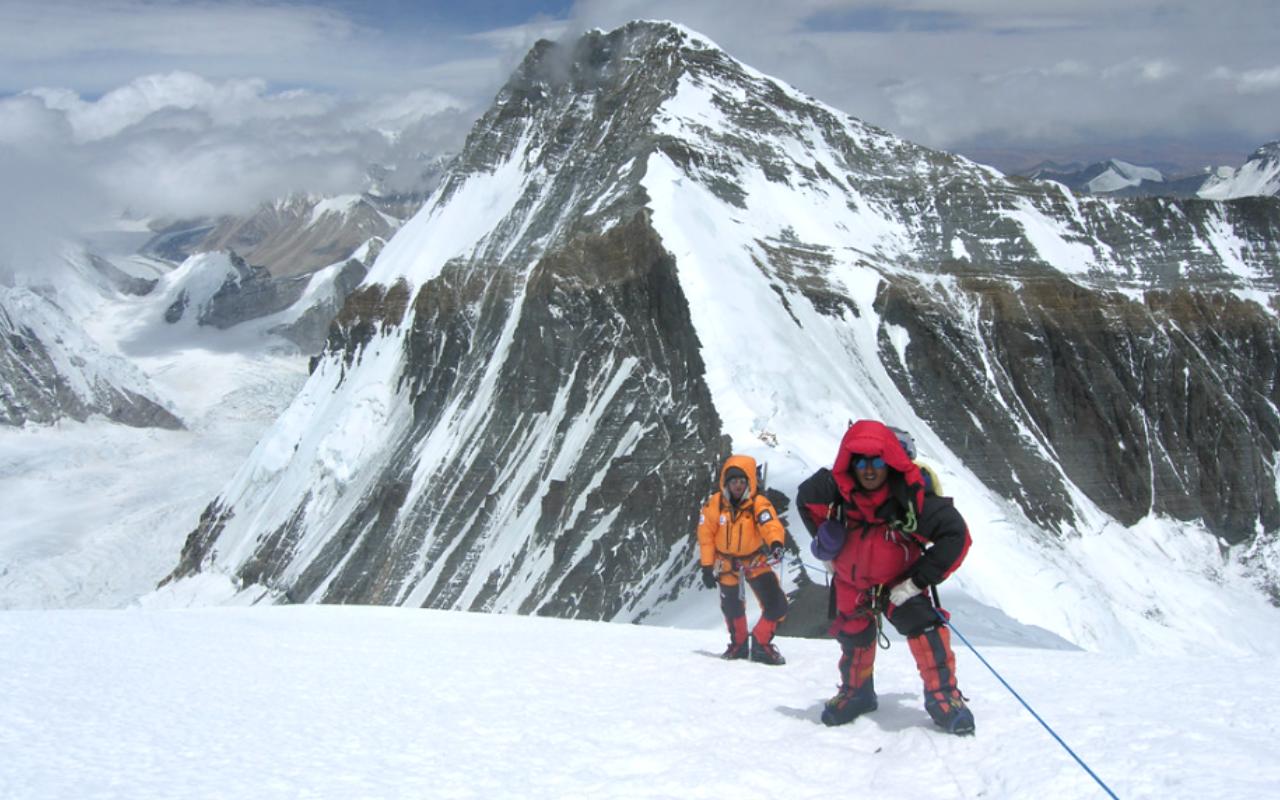
Mount Everest is the tallest mountain on Earth and also one of the most icy locations that a human being can ever be. The temperature does not exceed freezing even during the hottest months. The days are usually between minus twenty to minus thirty degrees, and on a bad day, it may be much colder, sometimes reaching minus thirty-five degrees or lower.
Powerful winds cause the cold to be a lot more pronounced, and even a slight shift in the weather can cause the conditions to get hazardous within a very short period. Thin air also causes difficulty in keeping the body warm due to this high altitude, and thus body parts like hands, feet, and face can become frozen within a very short period of time.
Water, equipment, and batteries become nearly frozen in no time. The cold is excessively high, and, therefore, climbers spend a few minutes at the peak before beginning to descend. The cold of the summit is not only uncomfortable, but also reminds us that this height is very harsh and unforgiving.
Spring
Most climbers reach the summit in May. On a typical summit day, temperatures stay between minus twenty-five and minus thirty degrees. During a rare calm weather window, the midday temperature may rise to about minus twenty. Nights and early mornings are even colder and usually stay near minus thirty.
Summer
Summer is slightly warmer but covered in monsoon clouds. Average temperatures in July are around -19. Days might reach around minus eighteen on a rare clear spell, but nights stay near minus thirty. Almost no one climbs during this season.
Autumn
Autumn begins with temperatures similar to spring but quickly becomes colder. In September, temperatures stay around minus twenty-five. By November, daytime temperatures often reach minus thirty-five or colder, and nights can fall into the minus forty range.
Winter
Winter is the most extreme season on the summit. January average temperatures are around minus thirty-six. Daytime highs stay near minus thirty-five, and nights fall below minus forty. The coldest storms can bring temperatures close to minus sixty. Wind speeds often reach one hundred to two hundred kilometers per hour. The wind chill can feel as cold as minus eighty degrees.
At the summit, climbers usually spend only a few minutes before starting their descent. Even with the best gear, the cold is powerful and dangerous.
Final Thoughts: Everest Cold Is Formidable and Fascinating
One of the most significant challenges that climbers may face is the cold of Mount Everest. As you ascend to the peak, the temperatures decrease with each step until you hit climatic conditions bordering on human survival.
This cold becomes the whole climbing experience. It has an influence on the duration of time that climbers spend outdoors, the rate of taking rest, breathing, and locomotion up the mountain.
Still, climbing Everest can be accompanied by nights when the water freezes in the tent and the days when the wind can freeze exposed flesh in a few seconds. But it is the cold that makes Everest so motivating as well.
It contributes to the enigma and loveliness of the mountain. Once the climbers have reached the top, they are not only overcoming the altitude but also the intense cold that is intense and covers them.
Everest cold is a lesson in patience, respect, and humility. People who hike up it go back with the memories that they have never forgotten, visiting the place where the sky and the earth meet, and where the air is very thin and cold. Everest is very cold, yet this is the reason why the mountain is one of the most popular locations globally.
 English
 Dutch
Dutch Japanese
 Hindi
Hindi Italian
 Spanish
 French
 German
 Chinese
 Korean
 Arabic
 Hebrew
 Russian
 Portuguese
 Danish
 Czech
Czech Polish
 Swedish