Everest Region Weather Guide – What to Expect Each Season
02 November, 2025
By admin
Introduction
The Everest Region, which is between lush subtropical valleys and stark high alpine terrain, provides an impressive variety in climates. Its diverse regions have a significant impact on the weather, which affects the trekking and climbing endeavors of the adventurers at all levels and pathways.
Knowledge of the weather conditions in the area is essential in planning the trips. It has a direct influence on the conditions of the trails, the level of acclimatization, and the physical and mental fitness required. The inability to predict weather alterations may hamper safety and triumph in the Himalayas.
The weather does not just change temperature, but also visibility and the difficulty of trails. Clear skies have amazing scenery, whereas the storms can severely lower visibility. Cold snaps, heavy snowfall, or rain can make conditions life-threatening, even for experienced climbers.
The Everest trekking season is further categorized into four seasons, namely, pre-monsoon spring, summer monsoon, post-monsoon autumn, and winter. They have different conditions which influence the difficulty of the trek, the scenery, and the number of visitors, thus they are very important in the planning of the adventures by every adventurer.
Overview of the Everest Region Climate
The altitudes of the Everest Region differ greatly, with an altitude of Lukla at 2,860 meters up to Everest Base Camp at 5,364 meters. This increase produces the unique climatic and environmental transformation along the hike.
The temperature gradually declines with altitude, while humidity typically drops. The oxygen level is reduced, and this makes breathing difficult. Such changes require physical acclimatization and proper pacing to prevent the occurrence of altitude sickness when climbing to the Everest Base Camp.
The weather conditions of the seasons are influenced by the barrier effect of the Himalayan range and the summer monsoon winds. Monsoons are characterized by heavy rain and clouds, whereas winter is characterized by cold and clear skies. The spring and autumn are more stable and dry.
The temperatures change according to altitude. At Lukla, temperatures can reach up to 15°C, while at Everest Base Camp, they rarely exceed 0–5°C and can drop to -20°C in winter.
Spring Season (March – May)
Highlights
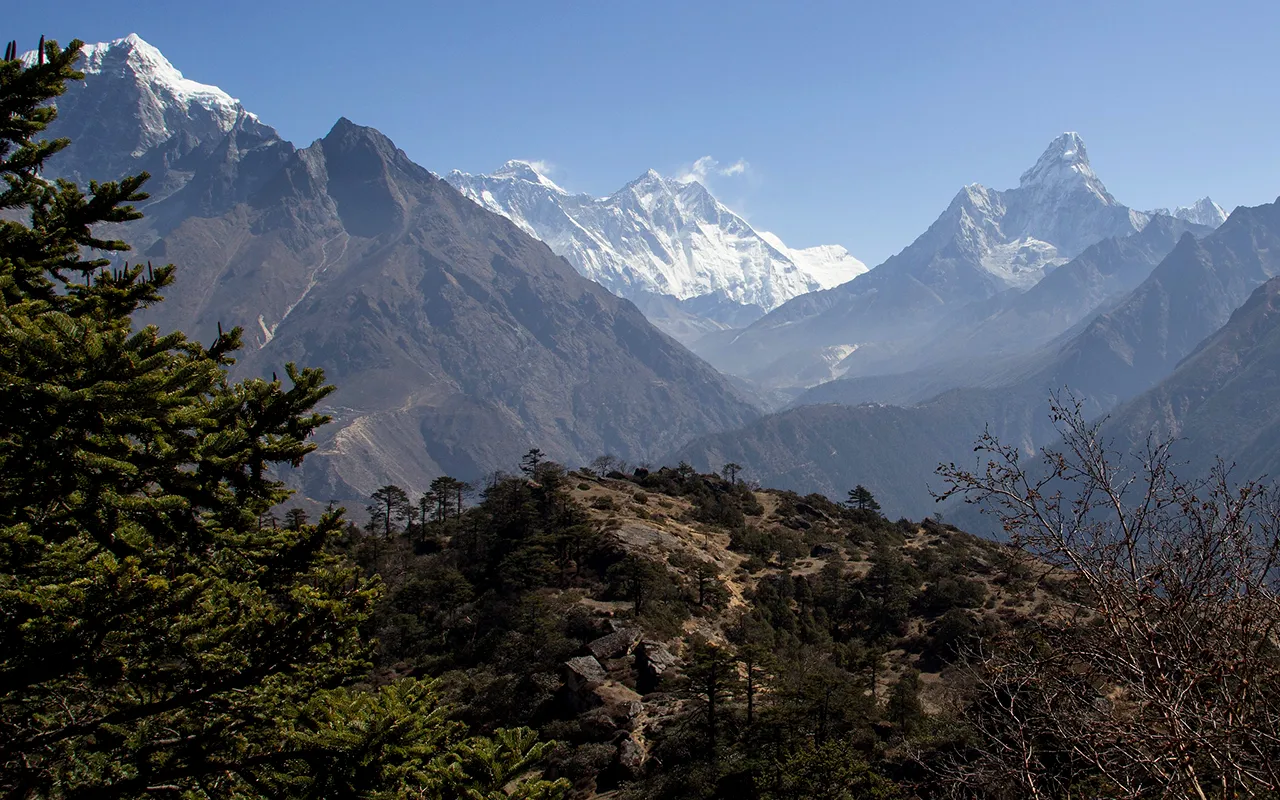
Spring in the Everest region is characterized by clear skies, steady weather, and colorful scenery. The visibility is excellent during this season, and the Himalayan mountains such as Everest, Lhotse, Ama Dablam, and Nuptse stand up on the viewpoints in a very beautiful way.
In the lower hills, rhododendrons blossom in tints of red, pink, and white to give forests a colorful trekking experience. The trails are bustling with trekkers, mountaineers, and Sherpa communities that are preparing for the busy mountaineering season in May.
Everest Base Camp, Gokyo Lakes, and the challenging Three Passes Trek are ideal in the season. Spring is a perfect combination of culture and nature with the best views, a long day, and a celebratory Himalayan spirit.
Weather
The spring is not very hot, but days are very warm, approximately 10-15°C in lower areas and 0 °C in the higher areas. Snow still falls in the alpine areas early in the month of March and slowly melts away as the season advances to the month of May.
At elevations above 4,000 meters, nights are colder, sometimes reaching freezing point, particularly in higher settlements such as Dingboche, Lobuche, and Gorak Shep. Although the evenings are chilly, it is still comfortable to walk during the day when the winds are calm and the sun is shining.
Spring brings minimal rainfall, and the trails are dry and safe. Perfect mornings and evenings make trekking easier and more enjoyable and minimize the danger of weather conditions, and provide consistent mountain views and easy and smooth trekking days to most of the trails in the Everest area.
Best For
The spring is the season that offers trekkers a panoramic Mountain View, beautiful sunrise and sunset, and pure crystal mountain sceneries of the Himalayas. Natural lovers are delighted with flowering valleys, wild animals, and silent snow-melt rivers.
It is a season that is ideal for those who seek relaxing trekking, moderate weather, and compensating mountainous views. Trails are not too busy yet are well-marked with a good mix of adventure, cultural experience, and breathtaking views.
Mountaineers who are planning to climb Everest, Lhotse, and other giant mountains would prefer spring, when the climbing window opens during late April-May. Trekking groups share trails with expedition teams, creating a motivating and inspiring Himalayan atmosphere.
Summer/Monsoon Season (June – August)
Highlights
The monsoon is characterized by heavy rainfall, forests, and spectacular clouds throughout the Everest region. The trails are not busy, and they provide a relaxing walk, waterfalls, mountain flowers, and closer contact with nature without crowds of tourists.
Wet weather, muddy paths, and cloudy mountains make this season the least favored season in trekking. Nevertheless, some intrepid mountaineers come here to find some solitude, cultural village life, and relaxing Himalayan views.
Weather
There will be rainfall that is not very frequent below 3,500 meters in Lukla, Phakding, and Namche, as well as mist and clouds at an elevation above. Temperatures are also moderate, producing humid but cool jungle and valley conditions.
On the lower altitude, the day temperature is 15- 20 °C, whereas on higher altitudes, the temperature is cooler. The trails are slippery, landslides might take place, and flights to Lukla might be delayed because of unstable visibility.
Best For
Trekking monsoon season is ideal for those who want privacy and a mountain atmosphere. This is an ideal season when one can savor green sceneries, serene resorts, and other scenic landscapes without the presence of the bulky crowds during the months of peak seasons.
Everest trails are not easy in monsoon, but the travelers can venture to rain shadow places such as Upper Mustang or Dolpo that are generally dry, hence make good options to go out on trekking during the monsoon season.
Autumn Season (September – November)
Highlights
The most famous season of trekking in the Everest region is during autumn when the skies are clear, temperatures are cold, and the views are spectacular. Himalayan giants such as Everest, Lhotse, and Amadablam glitter on deep blue skies.
The landscape is enchanted, as the dust is swept off by the rain, as a result of the monsoon. The trails are full of trekkers, making them festive. Cultural enrichment is imposed on the journey through the traditional celebrations that occur in the mountain villages.
Weather
Autumn is lovely, with daytime temperatures of 15-17°C in the lowlands and brisk nights. Temperature at higher camps is harsher at night, usually -10 to -5°C with an increase in altitude.
The air is also clean and dry with good trekking conditions and constant sunshine. The result of this mixture is good visibility, safe routes, and easy traveling logistics, like having fewer flight delays as compared to the monsoon months.
Best For
Autumn suits the traditional Everest paths such as EBC, Gokyo Lakes, and Luxury Treks. Trekkers have mountain views, cool walking weather, and welcoming tea-house accommodation throughout the trip.
This season is appropriate for photographers, nature lovers, and those who would enjoy festivals. Such cultural events as Mani Rimdu in Tengboche provide a good understanding of Sherpa spirituality, monasteries, masked dances, and Himalayan traditions.
Winter Season (December – February)
Highlights
Winter is characterized by calm trails, sunny days, and clean air. The snow falls on the Himalayas’ slopes and high villages to make a magical landscape. The trekkers have the luxury of silent teahouses, superb hospitality, and mornings with jutting sun-laden Himalayan peaks.
The crowds tend to be small, which gives an opportunity to stroll through popular sightseeing spots on their own. Lower passes remain open, whereas higher passes can be closed with deep snow, so flexible routing and planning are necessary.
Weather
Lower valleys in winter can still be cold, though, with an average temperature of 5-10 °C. Freezing is experienced at higher altitudes, and the temperatures drop to -15°C during the night, particularly in Gorak Shep.
In the early morning, there is a clear mountain view, but at night, the weather is very cold. Winter clothing is also necessary to keep one comfortable because winds and snow can be experienced in open areas of high altitude.
Best For
Winter is the time that suits hikers who like being alone, hiking through serene paths, and clear Himalayan scenery. The popular short trails, such as Namche, Tengboche View Hotel, are also perfect for scenic winter walks.
The people who are interested in easy adventure and staying at comfortable cottages and have a view of the sunrise will find this season very enjoyable. Nevertheless, high routes and far-off tracks can be closed, and it is advisable to use less rigid and safer plans.
Month-by-Month Weather Breakdown
Months
Weather & Conditions
Trekking Experience
Jan – Feb
Extremely cold mornings and nights, clear skies, occasional high-altitude snow.
Very quiet trails, stunning scenery; warm winter gear required, some high passes may be closed.
Mar – May
Mild temperatures, long days, blooming rhododendrons, excellent visibility.
Peak spring trekking season; EBC, Gokyo, and Three Passes routes are busy and vibrant.
Jun – Aug
Warm and wet with heavy rainfall below 3,500m, cloudy at higher altitudes, lush landscapes.
Fewer trekkers, slippery trails, possible flight delays; best to trek Mustang or Dolpo instead.
Sep – Nov
Clear skies, dry air, stable weather, crisp views, cool days and cold nights.
High season with great photography opportunities, Mani Rimdu festival, and all major routes open.
Dec
Cold but clear, some snowfall possible at higher altitudes, stable early-month weather.
Quiet trails and peaceful lodges; ideal for Namche, Tengboche, and Everest View Hotel hikes.
Tips for Trekking in Any Season
Layering will be of assistance to you in adapting to the varying circumstances with the increase in altitude. It not only keeps you warm when you are in the cold, but also ensures you are not overheated during climbs.
Even spring and autumn weather in the Himalayas can turn in an unexpected way. Warm layers and a light rain jacket make one comfortable and safe at any given moment.
Monsoon or winter delays or cancellations of flights may occur because of visibility and weather conditions. It is important to keep in touch with airlines or your trekking agency to check on the progress.
Local guides are the only ones who are aware of the weather patterns and trail conditions. They guide you on the safe paths, reduce risks, and change plans whenever necessary.
Give yourself more days on your schedule in case of unexpected delays, weather variations, or altitude changes. A flexible plan lowers the stress levels, thus you are more likely to make it through the trek without any problems.
Conclusion
The season of the Everest region brings about its magic, from flowers in spring, crystalline autumns, peaceful winter mornings, and the fertile monsoon sceneries few would ever dream of, yet many would love most, all the time.
The traveler can choose the time according to their comfort, trekking style, and personal adventure goal, whether you are seeking solitude, a festive environment, lush scenery, light snow, or the adventure picturesqueness of stormy mountain clouds as well.
No matter the season, the Everest region welcomes every dreamer with open-hearted villages, prayer-flag winds, sunrise peaks, and steady rhythms of mountain life, reminding trekkers that true reward lies in each mindful step.
 English
 Dutch
Dutch Japanese
 Hindi
Hindi Italian
 Spanish
 French
 German
 Chinese
 Korean
 Arabic
 Hebrew
 Russian
 Portuguese
 Danish
 Czech
Czech Polish
 Swedish